Generic Trademark Meaning in India: Causes, Legal Impact & Famous Examples
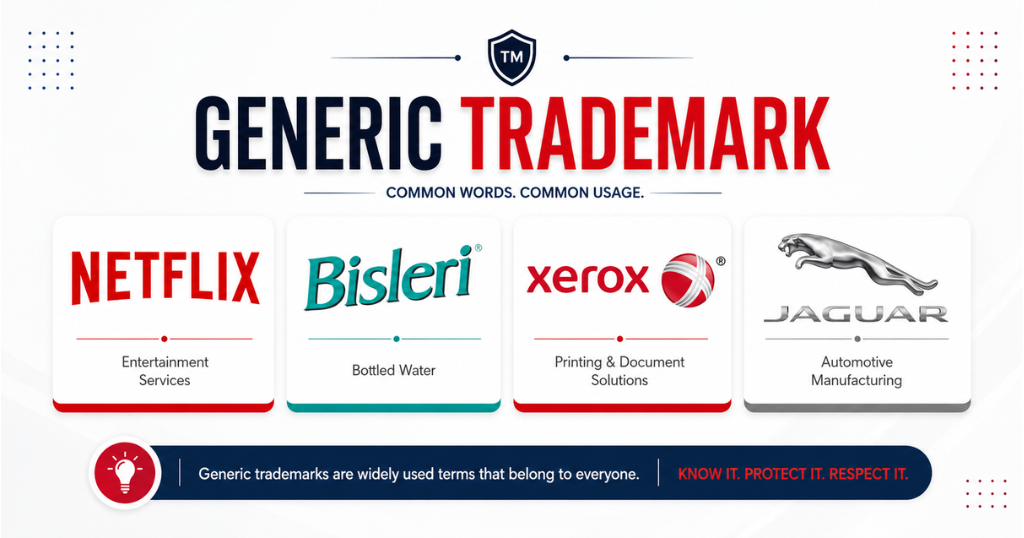
In today’s competitive markets, a brand name is one of the most valuable assets. Meanwhile, the trademark registration in India provides a legal identity to the brand’s name or any specific logo, mark, symbol, or slogan. However, often businesses aren’t aware of “generic trademark in India.” Yes, even after getting the trademark, a business’s brand name can lose its legal identity. Once a business loses its legal protection, it becomes generic. It means a certified brand name is starting to be used as a common word for the product name. In India, where the population is around 1.4 billion, any famous brand name can change into a generic term if the business isn’t managed carefully. But a generic trademark in India challenge can be avoided by knowing how generification happens and how to protect it. Here is everything about generic trademarks, causes, legal implications, and examples.
1. What is a Generic Trademark in India?
Understanding the generic trademark meaning is crucial for startups, companies, individuals, and MSMEs. In detail, a generic trademark is nothing but a word or name that was once a certified brand, but over time it became a common name of the product itself. When a brand name loses its legal identity after becoming a generic, the law no longer treats it as a trademark. A trademark determines who makes the product, but the generic trademark signifies what the product is.
For example, Centchroman (marketed under the brand name Saheli in India) is known as a generic name because it is the nonproprietary, pharmacological name for the active ingredient (ormeloxifene), rather than a brand-name trademark owned by a single pharmaceutical company.
Once a registered brand name trademark becomes generic, competitors start using it as well, and it loses legal protection.
2. Difference Between Brand Name & Product Name
Both the product name and the brand name serve different purposes for the companies. Even in terms of value and loyalty, both are different. But what makes them different from each other? Take a look at the table for a clear understanding:
|
Feature |
Brand Name |
Product Name |
|
Identity |
A brand name tells about the entire company or product line identity. It tells “who makes the product.” |
Product name signifies a specific, tangible item sold. Doesn’t have a unique identity like a brand name; it’s referred to as a common word. It determines “what the product is.” |
|
Nature |
A brand name builds trust, recognition, and emotional connection with consumers. Enhances the brand reputation in competitive markets. |
The product name is a common word, which helps buyers to determine specific features, styles, or categories of items. |
|
Goal |
Gets legal protection for the brand name and builds over time & endures, giving assurance of longevity. Brand name trademark for loyalty and recognition. |
Cannot be owned by one company, used by anyone. The product can easily be replaced or become obsolete. The product name is commonly for sale & usage. |
|
Examples |
Bisleri, Lal Tant Manjan (Dabur), Atta Noodles, iodized salt, Bajaj Auto, and Photostate |
Mineral water, Toothpaste, Instant noodles, photocopy (generic use), Tata Namak, and an auto-rickshaw |
Consumer Perception Test
The legal authority (courts) prioritizes the Consumer Perception Test to confirm when a trademark becomes generic. In case the company loses its legal protection, it can take the court for action. However, the court asks, “What do ordinary people think this word means?” If general people think of a word as a brand, that means the trademark is in a safe direction, but if they think of the product itself, the trademark becomes generic.
3. The Generic Trademark Under Indian Trademark Law
The Indian Trademark Law signifies that a trademark must help consumers to identify the source of goods or services. If any goods or services tell only about the name of the product, not the brand name, they don’t get trademark protection. A product name is a public asset that is considered a generic trademark in India. In such a situation, the businesses fail to claim the exclusive rights over them.
On the other hand, the Trade Marks Act, 1999, primarily governs the generic trademarks.
3.1 Trade Marks Act, 1999 (An Overview)
The Trade Marks Act of 1999 is a major law that regulates the whole trademark registration process across India. The laws ensure that:
- The businesses get protection for their brand names
- Eligible for trademark registration in India
- Protects the brand name from misuse and unfair competition
- Helps to avoid confusion among consumers
- Provides the exclusive rights to brands
The Act states that not every mark or word can be registered as a trademark, especially when the word is commonly used in basic daily life.
3.2 Section 9 Under Trade Marks Act, 1999
The Trade Marks Act, 1999, Section 9 discusses the absolute grounds for refusal of trademark registration in India. As per Section 9(1)(c) of the Trade Marks Act, 1999, any word or mark cannot be trademarked if it is commonly used in trade. Even a word that has become common among customers in everyday language cannot be trademarked. For example, the word “salt” cannot be trademarked because it is common in daily life language among consumers. Including milk for “milk” and sugar for “sugar.” These types of words only determine the product, not differentiate one specific brand from another.
3.3 A Generic Term Cannot Be Monopolised
In discussion, a generic term is mentioned as a word that belongs to everyone. Meanwhile, it cannot be controlled, as trademarks and such words are important to public discourse, competition, and commerce. Here is what you should know about monopolization for generic terms:
- Public Interest
A company cannot trademark a common word that is used by the public in daily language. This is because if a company gets the exclusive rights over a common word, then the other businesses will not be able to describe their product name.
Suppose a company trademarked “tea”; then what would other people call tea? That’s why tea is referred to as a product name, not a brand name.
- No Difference
Through the trademark registration, the businesses get rights to show their brand name as unique. But if it is a generic word, then it will only tell about the product, not the brand name.
Brand: Tells about the source of the product
Generic Word: Defines product
- Fair Competition
Once a brand is trademarked, it gets healthy competition under the Trade Marks Act, 1999. Whereas a generic term makes the product unfair, and that is where the competitors are stopped from using the basic language.
- Legal Requirements
The Indian court often says that common words cannot be owned by one trader. That’s why a generic word cannot be trademarked and also cannot be enforced.
4. What is Trademark Distinctiveness Spectrum?
The trademark distinctiveness spectrum determines how strong or weak a trademark is. A trademark gets much stronger legal protection when it is distinctive (unique). The uniqueness of a brand name increases the potential legal protection against infringement. Meanwhile, this spectrum is categorized into five different marks, from weakest to strongest. Read below:
|
Spectrum |
Explanation |
|
Generic Marks |
A generic mark only describes the common names of products or services. The generic trademark in India cannot be registered and does not get legal protection. The reason is that such words as “milk” belong to the public in daily language. |
|
Descriptive Marks |
It signifies a specific product quality, feature, goal, or characteristic. Means defines the product directly. It cannot be registered directly. For example, cold and creamy for ice cream. |
|
Suggestive Marks |
A suggestive mark only determines the product name and quality. It does not directly define the product. For example, Netflix suggests internet-based movies. |
|
Arbitrary Marks |
Such marks don’t contain a relation with the product but are real words. Arbitrary words get strong protection and can be registered. For example, “apple” is used for computers and “beedi/bidi for traditional, filterless, local cigarettes. |
|
Fanciful Marks |
Such are categorized as invented words, which are only made up for brands. It can be trademarked and also gets the strongest legal status, including being highly distinctive and easy to enforce. For example, “Kodak,” “Xerox,” and “Pepsi.” |
.5. What are the Reasons Trademarks Become Generic Over Time?
The public interests and habits for a specific good or service make the trademark generic. Here is how trademarks turn into generic words:
Brand Gets Extreme Popularity
When a brand gets famous, it starts converting into a generic word. For example, “In India, Maruti is the primary car brand that has become a generic word, often used to describe any small hatchback or passenger car.”
Lack of Administration
If companies fail to manage and legally act against competitors or the general public for using the mark, it leads to weakening of the trademark. Due to this, companies lose their brand’s name identity.
Public Interests
Xerox is a recognized American technology corporation. But the public started using the brand name as the product itself. Xerox for the public means a process of making a photocopy.
Misrepresentation by Social Media and Newspapers
“Kleenex” is a recognized brand for facial tissues. But it became a generic term for any soft, disposable handkerchief. TVs, social media presenters, and other advertisers casually call all tissues “Kleenex.”
Legal Risk due to Common Word
Even if a company knows it is a common word, even in the minds of consumers, the courts reject the application due to it being a generic word. As a result, the trademark loses protection.
6. The Legal Impact of a Generic Trademark in India
Once a registered trademark is used generically, this can cause many different legal repercussions for the business that owned the trademark in the first place:
- Loss of exclusive right to the trademark: Once a registered trademark is used generically, the business can no longer claim an exclusive right to it under the Trade Marks Act of 1999, Section 9(1)(c).
- Cancellation due to generification: If a trademark becomes a generic term through the extensive and universal use of the trademarked term by many competitors, that trademark can be cancelled through a third party’s or competitor’s application to a court (among other things).
- Free Use of Mark by Anyone
Once a word becomes generic, it can be used for free by competitors who want to describe their products. As a result, competitors don’t need to look for a new name for their product and can use the generic word. For example, most companies in India sell “Thermos” bottles without paying royalties to the original Thermos company.
- Brand Value & Goodwill
If you do not have a unique brand name, it can create challenges for companies that want a unique identity. Once a brand becomes a generic trademark in India, it loses distinctiveness, reducing the market power and pricing benefits. As well, customers lose interest in generic marks if products are not associated with the original brand.
7. How Can Trademarks Be Protected from Becoming Generic?
The businesses operating in India can protect their brands from becoming only a generic mark. Consider these lessons:
- a) Correct Marketing of Brand
Instead of using only the name, always use the brand with the company name when advertising. For example, “Band-Aid® brand adhesive bandages,” not just “Band-Aid”. During product marketing, use the brand name with the company name accurately.
- b) Track Public Usage
Multi-time use of a brand name on social media and advertising platforms by the public can turn a brand name into a generic trademark. The owner can take action against competitors if they misuse your brand name.
- c) Legal Action
Apply for trademark registration early for your product and activate your exclusive rights to avoid potential genericide.
- d) Manage Brand Distinctiveness
Always prefer unique brand names that do not describe the products directly. Strong brands are always arbitrary, suggestive, or fanciful. For example, “Jugar” (cars) is an arbitrary word.
- e) Educate Employees & Partners
Teach the employees and partners that they must use accurate brand terminology to prevent generic use.
8. Frequently Asked Questions on Generic Trademarks
- What is a generic trademark?
Ans. A generic trademark is a word that was known as the certified brand name of a business, but over time, due to high use in daily language, it has become a common name for the product.
- Can a generic work trademark be registered in India?
Ans. No, a generic word cannot be registered as a trademark in India, as mentioned under the Trade Marks Act, 1999. A common word in use by the general people cannot get legal protection.
- Why does trademark law not protect generic terms?
Ans. A generic word or term is described as public property, which is why it cannot get trademark law rights.
- What is the difference between a generic term and a trademark?
Ans. A trademark provides the legal rights to a brand name for its products. It determines who makes the product. Whereas a generic term shows what the product is.
- What is genericide?
Ans. Genericide is described as a process by which a registered trademark loses its legal protection rights after becoming a generic word.
- How do courts confirm if a trademark is generic?
Ans. Courts generally conduct the “Consumer Perception Test” to determine whether people understand the word as a brand or as a product name.
- Can a generic trademark regain identity?
Ans. No, once a term/word becomes generic, it cannot regain legal protection.
- What are the famous generic trademark examples?
Ans. The common examples of known generic trademarks include Aspirin, Thermos, USB (Universal Serial Bus), and Cellophane.
- Can competitors use a generic trademark?
Ans. Yes, once a trademark loses its protection and becomes a generic term, it can be used legally by any business.
- How to prevent trademarks from becoming generic?
Ans. The businesses can protect their brand trademark from becoming generic. They can be:
- Using the trademark as an adjective, not a noun.
- Educating consumers, employees, and the media.
- Enforce trademark rights
9. Choose LegalRaasta to Protect Your Trademark
With LegalRaasta, you can safeguard your brand name in competitive markets and ensure complete legal rights. At LegalRaasta, you will get:
-Trademark Registration Services
– Trademark Monitoring and Enforcement
– Expert Legal Consultation
10. Conclusion: Safeguard Your Brand Before It Becomes Generic
For long-term success, protecting a trademark is essential for business. Once your brand name becomes only a generic term, it loses its complete legal rights, including market power and goodwill. To avoid the generic trademark challenges, the businesses must actively utilize trademarks, educate consumers, monitor misuse, and enforce rights under the Trade Marks Act, 1999. Get legal brand protection with LegalRaasta.

Related Posts
 Trademark
Why Every Artist Needs a Trademark: A Complete Guide to Protecting Your Creative Identity in India (2026)
Read More →Trademark Class 5 in India (2026): Pharmaceuticals, Veterinary Medicines, Pesticides & Registration Guide
Read More → Trademark
Trademark Class 4: Industrial Oils, Greases, Lubricants, Fuels, Candles & Wicks Guide
Read More → Trademark
Trademark Class 3 in India (2026): Cosmetics, Cleaning & Complete Registration Guide
Read More →

Our Clients





Featured In