
FSSAI 2026 Update: Scientific Evidence Now Required for Food Claims
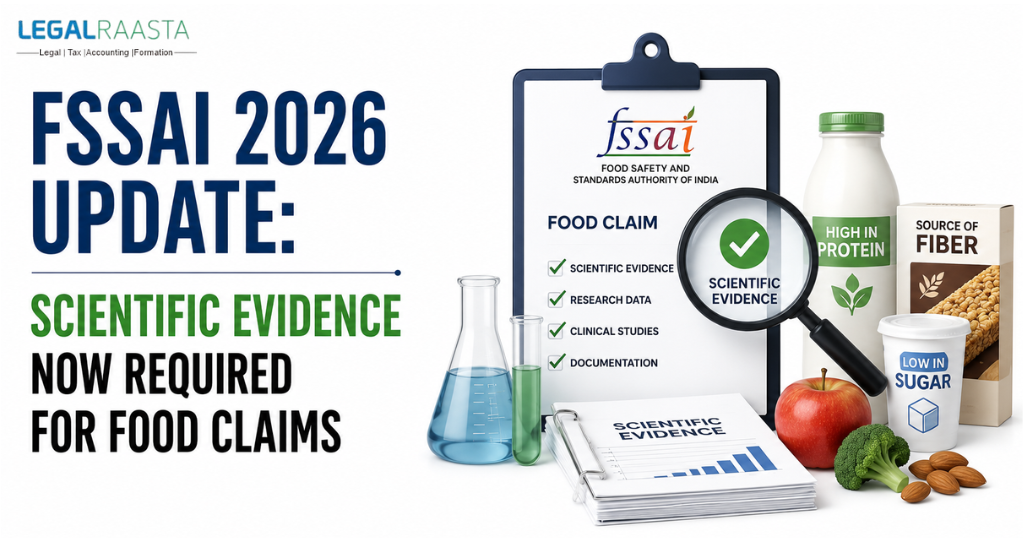
The Indian food regulatory authority Food Safety and Standards Authority of India (FSSAI) updates every month or year related to new rules and changes in compliance regulations. Once again, with a new year, the FSSAI 2026 update has made significant changes to the food safety and compliance regulations. Although it will significantly impact the manufacturers, brands, and marketers who operate food businesses.
Well, as per the 1st January, 2026 rules, providing the scientific evidence to support any claims made on new food has become legally mandatory. The major purpose of these new rules is to bring transparency into the food supply chain. If you are in the food industry or planning to launch your own food manufacturing unit, then understanding the new FSSAI rules is crucial. Take a deep dive into this blog to get the latest update on compliance with regulations with the FSSAI license.
1. What Changed in FSSAI From 1 Jan 2026?
Majorly, the manufacturers who produce the food are responsible for providing credible scientific evidence to ensure their quality. It further supports the health claims, nutritional claims, and other types of food items. A standardized format for new food items is required, and stringent controls on vague health claims like food is “healthy” or “natural.” The new rules represent a major shift from marketing to evidence-based innovation for enhancing the consumer’s safety.
Before the 2026 rules and regulations, FSSAI only focused on managing the safety and quality by mandating the compulsory FSSAI registration. However, the holder of the FSSAI license now meets the new regulations, so they are now seriously focused on consumer safety and health.
Key changes in 2026 for food include:
- Scientific Evidence for Claims: The food companies must mention the detailed information, such as nutritional content, consumption patterns, toxicology, and allergy risks, after complete scientific trials.
- Labeling and Advertising: Advertising of food items is only eligible when it is substantiated with valid scientific data. Following a single and detailed format is mandatory to ensure consistency.
- Stricter Approval Process: Only those food items that meet the evidence requirements will be approved. For this, FSSAI will verify claims more deeply.
2. Who Is Affected by the FSSAI 2026 Update?
New updates of FSSAI are not only affecting individual food operators but also a broad range of stakeholders within the food industry. It includes:
- Food Manufacturers: The FSSAI’s new rules apply to manufacturers who produce the food items, especially those who claim health benefits or nutritional advantages. They are now responsible for issuing the scientific evidence for any such claims if made on a food item or in promotional materials.
- Food Marketers and Advertisers: Any agencies that run food promotional campaigns or advertisements will need to verify that all claims made on the items are supported by solid scientific evidence or research.
- Importers: Foreign companies that import the food items to India must also align with FSSAI’s new rules. Securing the FSSAI license is not enough for them. But, before claiming health or nutrition, one must follow the rules and standards.
- Small and Medium Enterprises (SMEs): Following the new FSSAI rules might be a little challenging for the small food businesses. As SMEs, they might not have had many resources to claim food items with scientific data. Due to the lack of research equipment, it could be an additional hurdle for smaller food businesses.
- Consumers: While the rules by FSSAI are primarily imposed on the businesses, it is a beneficial point for the consumers. With a scientific database, it will clarify that all claims made on food products are credible.
3. What Counts as a “Claim” Under FSSAI 2026 Update?
The Food Safety and Standards Authority of India (FSSAI) classifies claims as any statement made on the label, packaging, or through advertising about a food item that indicates any specific quality attribute, property, or characteristic. Claims for FSSAI can be made regarding health, nutrition, and functionality.
The following list outlines common examples of claims that are governed by the FSSAI regulations:
- Health Claims: Health claims between the sold product and the potential health benefits it holds. It determines how much that particular product contains the ingredients to support health. For example, “This product helps reduce blood cholesterol.”
- Nutritional Claims: Nutritional claims refer to the overall nutritional range of a particular food item. These references add “High in Protein,” “Low in Fat,” or “Rich in Vitamins.”
- Functional Claims: Functional claims describe the food items. It confirms how much the food item affects its users, including the types of improvements or benefits it offers. For example, “Increases Your Energy” or “Aids in Better Digestion.”
- Descriptive Claims: Finally, descriptive claims are for the components of the food items. For example, the food item is “gluten-free” and “sugar-free.” Including any certified “organic” foods must now be substantiated by science for compliance with FSSAI.
To summarize: When making a claim about any attribute of a food product, such as the examples above, the FSSAI has stated that the claim must be supported with scientific evidence in order to influence purchasing decisions among consumers.
4. What Scientific Evidence Does FSSAI Require for Food Claims?
As per the latest update by the FSSAI, they require strict scientific evidence for food claims, including toxicological studies, accurate data on Indian consumption patterns, etc. The FSSAI 2026 update has stated that for all claims made on food products, scientific evidence must be provided to prove the claim’s validity.
To add credibility to a product’s health-related and functional claims, any data used to substantiate them must come from valid scientific research. For example, human clinical trial data is the most reliable form of evidence for health-related claims and is, therefore, the strongest evidence of health benefits for consumers.
Other valid scientific evidence supporting a product’s claim(s) may include peer-reviewed published studies in reputable scientific journals, systematic reviews (meta-analyses), or articles published in reputable scientific journals that discuss the product’s ingredients or intended uses and benefits. In case the food claims have been approved by a recognized food governing body like the FDA or EFSA, this will serve as the best scientific evidence.
It is important to note that FSSAI refused to give priority to anecdotal evidence or unsupported assertions. All claims or evidence related to food items must come from a credible and verifiable source.
5. FSSAI New Product Launch Checklist (2026-Ready)
Be ready for the FSSAI’s new rules if you are an Indian food business operator. Before launching a new food product in India in 2026, the food business operators (FBOs) must go through a comprehensive FSSAI compliance. The new robust framework highlights the digital compliance, stringent labeling, and scientific justification of the product. In short, it is important to follow this comprehensive checklist to ensure compliance with the FSSAI 2026 update and rules:
- Review Claims: The new rules highlight that if an FBO is making any claims or reviews regarding the food item, it must verify them and plan to make claims about the product (health, nutritional, functional, etc.).
- Gather Scientific Evidence: All claims made by the food business operators (FBO) must be based on scientific evidence or the conduct of the right studies for it. But it is important to note that the evidence should be from a trusted source.
- Update Product Labels: The claims mentioned on the food product’s label must be accurate and based on evidence of fact.
- Submit for Approval: Once the FBO meets the above requirement, submit your products along with their claims via the FSSAI FoSCoS platform, which is the only official platform to register for food with FSSAI.
- Training and Compliance: All members of the food industry, whether they are in a restaurant or a hotel, must be aware of the FSSAI’s new compliance requirements. Training for the safety and quality standards is also compulsory. The team must be trained on how to handle claims and evidence.
- Monitor and Review: After the launch of the product and FSSAI license approval, take the feedback of customers and monitor them. It is crucial for ensuring ongoing compliance.
6. FSSAI FoSCoS Route: How to Submit for Licensing/Approvals
Since the digital era has taken place, the FSSAI authority has simplified its licensing and approval process through the Food Safety Compliance System (FoSCoS). It is a single window for food operators who want to apply for FSSAI licensing or registration, including product details for approval. Follow this step-by-step guide process under the FSSAI 2026 guidelines:
Step 1: Create an Account on FoSCoS
If you are a new food business operator in Indian markets, you must register for the FSSAI license online. The FSSAI FoSCoS portal is the single window where you need to make a profile.
Step 2: Submit Product Details
With the application form, mention the complete details of the products, including the claims made about the food products.
Step 3: Upload Supporting Evidence
Attaching the scientific evidence to the application to verify the claims is mandatory. This evidence can be clinical trials, published research, or other major documents that certify the claims.
Step 4: Pay Fees
A government fee is required to pay for the food FSSAI license registration. The licensing or submission fee is mandatory.
Step 5: Approval Process
Application details, including food product claims, will be scrutinized by the FSSAI. If you comply with FSSAI’s new guidelines, a necessary approval will be issued.
7. FSSAI Proprietary Foods in 2026: Key Compliance Points
“Proprietary food” is food that does not contain a specific standard that is prescribed by FSSAI, but is still being distributed in markets to consumers with certain claims or attributes. Therefore, such food products are subject to certain requirements, including:
- Any health, nutritional, or functional claims made about the proprietary food must be made only by scientific evidence.
- Labels must accurately reflect the nature and benefits of the food, as substantiated by the evidence.
- Even though proprietary foods are not bound by standard regulations, they still need permission for their claims.
8. Top FSSAI Rejection Reasons in Claim Submissions
Even fulfilling the details and providing the evidence is not enough. According to FSSAI’s reviews, solid evidence is required to verify the claims made on products. The common reasons for rejection of an application include:
|
Insufficient Evidence |
If the submitted scientific evidence fails to match the claims, the FSSAI license submission will be rejected. |
|
Misleading Claims |
If the claims about the food products are found to be misleading or deceptive to customers, FSSAI will reject the application request. |
|
Non-compliance with Labeling Rules |
Misuse or violation of FSSAI’s labeling regulations can cause the application rejection. |
|
Inadequate Research |
Inadequate or limited research is not subject to meeting the scientific standards set by FSSAI. |
9. FSSAI 2026 Update Action Plan: What You Should Do Now
The adherence to the new FSSAI 2026 update has become more than a legal requirement. Start with auditing your product by identifying any products with health, nutritional, or functional claims. Must ensure that the evidence you provided backed up your claims. Get day-to-day updates on labels and marketing requirements to ensure that they align with the new compliance and rules. For the FSSAI license approval and product submission, navigate the FoSCoS platform. Furthermore, your marketing, legal, and compliance teams must be trained and follow the new regulations.
10. FSSAI 2026 FAQs on Claim Evidence Requirement
What is the recent change in the FSSAI’s approach to product claims in 2026?
Ans. FSSAI’s new rules shifted from focusing on assurances to providing mandatory scientific evidence for all claims made on food products.
What constitutes “scientific evidence” under the new FSSAI rules?
Ans. FBOs are responsible for providing the scientific evidence for their food products, which must be comprehensive. It must also include published data from in vitro, in vivo, and human studies. The lab test must cover the nutritional composition and quality, consumption pattern, toxicological study, and allergy risks.
Is a specific application format required for submitting evidence?
Ans. Yes, all FBOs must follow a single, standardized format for data submission. But failing to submit data in an accurate format can cause approval rejection by the FSSAI authority, including revocation of the FSSAI license.
When does this new FSSAI requirement apply?
Ans. Stakeholders who approach the FSSAI for a risk assessment are eligible to comply with these new requirements. It is also applicable when they are introducing new products or requesting changes to existing food standards.
Are claims related to disease prevention or cure allowed?
Ans. No, claims that suggest the prevention, cure, or treatment of diseases (e.g., “treats diabetes”) are strictly prohibited under FSSAI regulations.
Can a food business use FSSAI approval of a claim in its marketing?
Ans. No, approved claims are prohibited from being used to promote a product. They cannot use the FSSAI logo or license number in any way.
What is the penalty for using misleading or unverified claims?
Ans. The non-compliance with FSSAI’s new regulation can result in severe penalties, including stringent fines and imprisonment.
Is shelf-life testing required for product claims?
Ans. Yes, shelf-life claims must be justified using scientific data or stability studies, not assumptions.
How many claim statements can I include with one FSSAI application?
Ans. A maximum of 3 claim statements per FSSAI application can be submitted by stakeholders.
How can businesses comply with these new requirements?
Ans. Regular internal compliance audits should be conducted by businesses; they should evaluate their company’s product labeling and claims frequently, keep their electronic records up to date, and obtain professional advice on products that have many different variants.
11. LegalRaasta Help for FSSAI Claims & Compliance
Adherence to FSSAI claims and compliance is no longer a burden for stakeholders or FBOs. LegalRaasta helps the desiring food businesses with FSSAI compliance by handling online registration, risk assessment management, FSSAI licensing, FSSAI license renewal, and much more. They offer a wide range of services for FSSAI’s various requirements so that food businesses can focus on their core operations. For more updates, visit www.legalraasta.com.

Related Posts
 FSSAI License
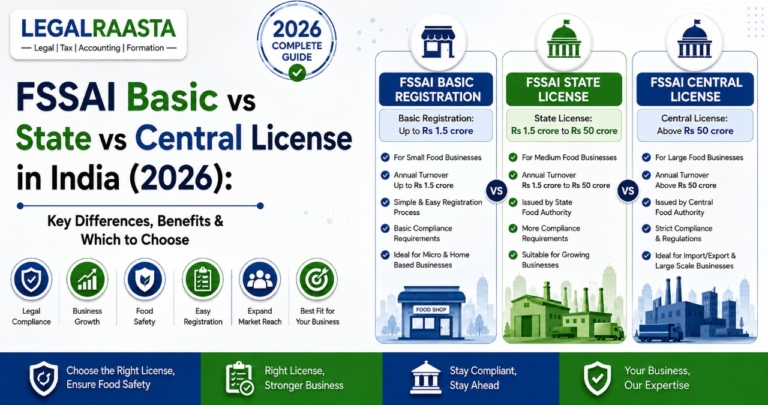
FSSAI Basic vs State vs Central License in India (2026): Key Differences, Benefits & Which to Choose
Read More →
 FSSAI License
How to Start a Bottled Water Business in India: Cost, Licenses & Setup Guide (2026)
Read More →
Our Clients








Featured In