
How to Start a Business for Women in India (2026): Your Complete Startup Guide
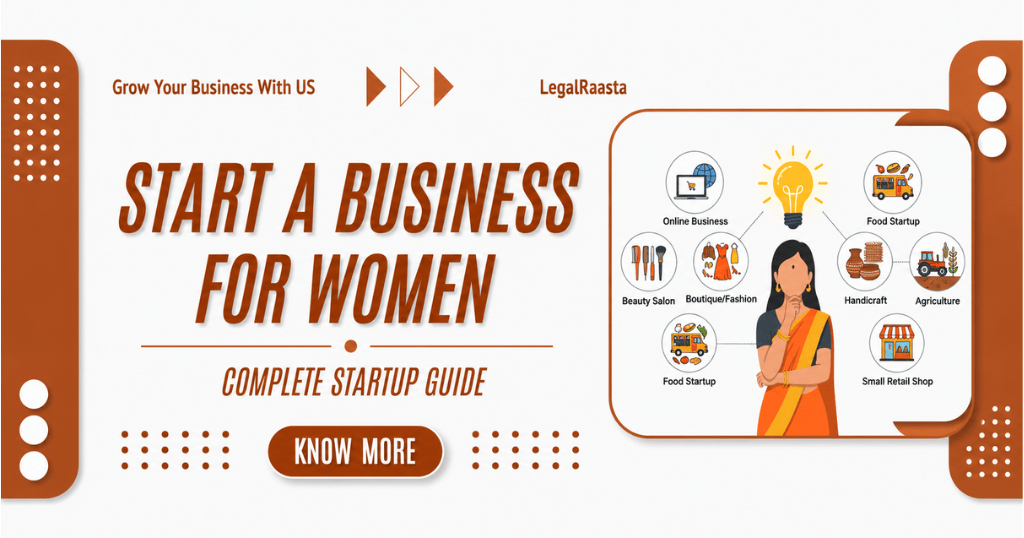
Whether it is a small business in the home or a large company, women have made their contributions in every field. For a woman, independence means earning without any support, building her own income source, and following her passion. In such surroundings, a woman not only balances outer-world work but also balances her personal life. As of 2026, there are thousands of Indian women who have established their own brands, among them Kiran Mazumdar-Shaw (Biocon), Falguni Nayar (Nykaa), Bandana Luthra (VLCC), Ghazal Alagh (Mamearth), etc. Such success inspires those women who have only stayed inside doing household work and haven’t found any opportunity. But, in 2026, there are various business opportunities for women so that they can prove themselves on a bigger stage. This comprehensive guide will explore how women can start a business, including government schemes, and complete the business setup process.
How Does Business Impact Women’s Lives?
In the last 20 years, women have grown in every business sector, which allows them to create their own opportunities and manage work-life balance. A business impacts women’s lives by fostering economic empowerment, independence, and social mobility. As per the data, the women entrepreneurs mostly invest in family health and education. Their contribution in several fields helps to boost a nation’s economic range. However, women face several barriers in building and maintaining businesses, such as limited access to finance and societal bias. To overcome these barriers, the Indian government implements various schemes and subsidies for women who want to start their own businesses.
Business Ideas for Women in India
Despite worrying about a big investment to start a business, women must make a strong plan and hold confidence and passion for a specific thing. As of 2026, Indian women are turning their passion into real-life examples. Here are a few business ideas for women:
|
Tiffin Services/Catering |
A great business idea for women who don’t want to socialise too much and have a passion for cooking. This business service includes preparing food items for working professionals or catering for small local events such as kitty parties or birthdays. |
|
Baking & Homemade Chocolates |
If you specialise in baking cakes and artisanal chocolates, you must go for it. |
|
Daycare/Crèche Services |
In current times, this service has the highest demand for working parents and is often run from home. |
|
Freelance Content Writing/Editing |
If you have a passion for writing content and expressing your thoughts in words, choose writing blog posts, marketing copy, or technical content for websites. |
|
Social Media Management |
The women who are very active on social media and aware of its algorithms can choose to manage social media platforms like Instagram/Facebook. |
|
Online Tutoring/Coaching |
Start offering personalised academic lessons or coaching in fitness, music, or art. |
|
Virtual Assistance or Graphic Design Services |
Convert your ideas into the real world by offering remote administrative support to businesses. |
|
Boutique & Tailoring |
A better business idea for creative women. Start designing and selling clothes, custom tailoring, or ethnic wear. |
|
Handmade Jewelry/Crafts |
Invest in creating and selling unique, beaded, or clay jewellery items. |
|
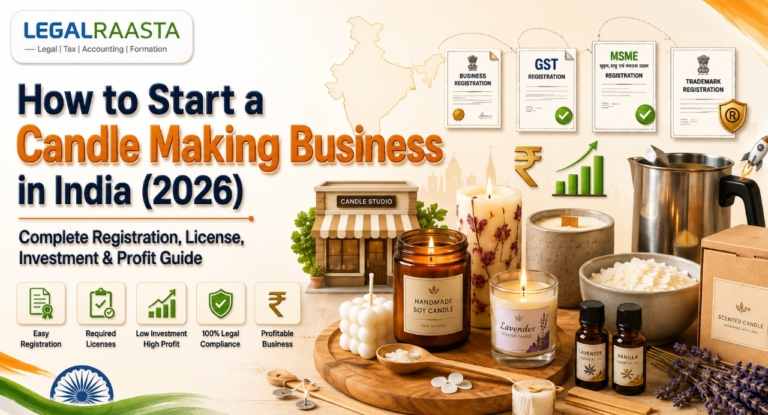
Candle/Soap Making |
Crafting scented or decorative candles is an ideal business option for gifting and home decor. |
|
E-commerce Reselling |
Use social media or a website to sell curated products. |
|
Beauty & Salon Services |
Starting a local parlour is often a primary business idea for women. Can also start a bridal makeup studio or a specialised nail art studio. |
|
Gardening/Plant Care Services |
Selling plants or offering indoor garden setup and maintenance. |
|
Photography |
If you are passionate about clicking every special moment or product, make a career in photography by specialising in photography, candid or small event photography. |
How Can Women Start Their Business in 2026?
Investing in products and making a strong plan is not enough for women. Securing the legal authorisation to run a medium- to large-sized business is crucial. But with the right guidance and support, all these steps can be managed. Follow this step-by-step business establishment procedure:
Step 1: Conduct Market Research
Before starting your business services, it is crucial to do some basic market research. Conduct market research to know about the market trend and whether your service demand is in the market or not. Market research not only saves time but also valuable money. Use these strategies:
- Communicate with nearby people
- Use online polls to understand people’s choices.
- Visit nearby markets to analyse local trends
- Look for a unique angle
Step 2: Make a Strong Plan
Maybe your business plan is small, but it must be strong, clear, and understandable. The basic questions must be part of your business planning, including
- What services or products do you sell?
- Which type of customers do you want to target?
- What things make your service or products different and unique?
- How much investment is required to start your small business?
- What will be the location to sell the products?
- What will be the strategies to promote your business?
A well-structured plan helps to move forward without hesitation when establishing any business and improves overall decision-making in one way.
Step 3: Make a Budget Plan
There is no need to invest a large amount to start the business. Start with a very small investment. Begin the process by listing all the things that you require, such as:
- Raw Materials
- A mobile phone
- Internet Connection
If required, any funding can be leveraged for women-focused government schemes or small business loans.
Step 4: Apply for Registration
If you are planning to run only a small business, then there is no requirement to apply for any license or registration. But, in case your business grows after some time, and you want to enter a competitive market, then you need to register your business. The major registrations or licenses required are
- GST registration certificate
- Shop License
- UDYAM registration
These licenses provide the legal authorisation to operate any business lawfully, including getting loans or government benefits more easily.
Step 5: Promote Your Business
Start promoting your business to your local people, such as friends, family members, relatives, and local groups. Make a group on social platforms like Facebook, Instagram, and WhatsApp to share daily updates about your small business.
Government Support & Resources for Women Entrepreneurs
As of 2026, to grow women’s businesses, there are several resources and supports available, generally provided by the government, banks, and private organisations. With this government support and key resources, the women entrepreneurs in India can easily grow in a short duration.
1. Indian Government Schemes for Women Entrepreneurs
The Indian government offers numerous schemes for female entrepreneurs to foster financial independence and business growth. Here is the list of top government schemes for women entrepreneurs in India:
- Mudra Yojana for Women (Mahila Udhyami Yojana): Under this scheme, female business owners can get collateral-free loans up to Rs 10 lakh for micro/small enterprises. But it is categorised in the business growth range: the Shishu, Kishor, and Tarun categories.
- Stand-Up India: Facilitates bank loans between ₹10 lakh and ₹1 crore to at least one woman borrower per bank branch for setting up greenfield enterprises.
- Trade Related Entrepreneurship Assistance and Development (TREAD): NGOs get 30% government grants for assisting and training women in non-farm activities, with the rest of the loans covering 70%.
- Mahila Udyam Nidhi Scheme (SIDBI): Under this scheme, female entrepreneurs are eligible to claim a loan of up to 10 lakh to set up new ventures or expand existing small-scale units.
- Women Entrepreneurship Platform (WEB): A NITI Aayog initiative that offers a unified ecosystem for mentorship, funding, and networking to female entrepreneurs.
- Dena Shakti Scheme: Provides loans up to Rs 20 lakh to those female entrepreneurs who want to grow in agriculture, retail, and manufacturing. The loan provides interest rate concessions.
- Annapurna Scheme: Introduced for women who want to run a food catering business, providing loans to buy equipment and utensils.
- Udyogini Scheme: Offers loans at low interest rates for females to start businesses.
2. Business Loans By Banks
Several banks and financial institutions provide the loan for females at lower interest rates. The major banks that offer women-specific loans are:
- Punjab National Bank’s Mahila Udyami Scheme
- HDFC’s Parivartan Loan
- SBI’s Stree Shakti Loan
With the help of this loan, the women entrepreneurs can easily buy equipment, raw materials, or open a shop.
3. Industry-Focused Skill Development Programs
If you are in a new business field, you must leverage free and low-cost training programs that help you learn new skills. Several well-known training resources include
- The National Skill Development Corporation, or NSDC
- MSME Training Facilities
- NITI Aayog’s Women Entrepreneurship Platform (WEP) is part of the Skill India Mission.
4. Private and NGO Assistance
Additionally, some NGOs and private organisations support women by providing business tools, small funding, and mentorship.
For instance:
- Self-Employed Women’s Association, or SEWA
- TIE Women’s Network
- FICCI Ladies Organisation (FLO)
Key Licenses & Registrations to Start a Business in India
Before starting any business in India, it is crucial to go through the legal requirements. Even if you are operating an in-house business, securing the right license helps you grow faster.
|
License/Registration |
Features |
Remark |
|
Business Registration |
For choosing the right business structure, one must first consider what the nature of your business is and whether you want to operate alone or with members. The common business structures are
|
Businesses must be registered with the Ministry of Corporate Affairs (MCA). |
|
TradeMark Registration |
It’s mandatory if you have a brand name and is required to prevent unauthorised use. It is mandatory if you have a brand name and is required to prevent unauthorised use. |
Provides the legal rights to sue for infringement |
|
UDYAM Registration |
When you want to avail of MSME-specific benefits, subsidies, and incentives. |
Can claim to get loans under specific MSEM schemes |
|
GST Registration |
Applying for GST registration is mandatory if business turnover exceeds Rs 20 lakh (or Rs 10 lakh in some states). |
Apply for registration within 30 days of the date on which your business becomes liable for registration |
|
FSSAI License |
If you are planning to start a food business, obtaining the FSSAI license is crucial. |
The license is issued by the Food Safety Department. |
|
Shop & Establishment License |
If you are planning to open any commercial business (like a shop, salon, or any other), Shop & Establishment registration is crucial. |
It regulates labour conditions, such as working hours and wages, for employees |
|
Business Bank Account |
After business registration, opening a separate bank account in your business name is crucial. |
It helps to manage the financial activities separately and facilitates an easier route while applying for loans. |
Top Barriers Women Face in Business Setup
Starting a business in India by a woman is not as easy as it looks. A woman entrepreneur faces significant challenges in her business startup journey. Here are the common obstacles female faces encounter and their solutions:
Limited Access to Capital: Often, women entrepreneurs lack property for collateral and face bias from lenders.
Solution: Leverage the government schemes like the MUDRA loan scheme, including seeking angel investors who target women.
Stuck in Professional & Personal Life: In society, it is fixed that a woman’s first responsibility is childcare and managing household work. Due to this, it becomes difficult to manage both family and business.
Solution: Must avoid non-essential tasks, make a strict business time period, and seek remote work technology.
Societal Norms & Bias: It can be challenging to be taken seriously by customers, employees, and investors due to gender bias and stereotypes.
Solution: Create a network of professional contacts, look for mentors, and present data-driven business strategies.
Limited Professional Networks: In a male-dominated industry, women often have less access. Although this nature minimises partnership opportunities for females.
Solution: Be active in visiting industry events, participate in women’s chambers of commerce, and make connections on LinkedIn.
How Does LegalRaasta Help Women Entrepreneurs to Start Businesses?
For females, starting their own business has become much easier, as several platforms, including us, help to streamline the regulatory burden. At the LegalRaasta platform, you will get support for streamlining legal burdens, tax requirements, and the registration process. The key ways we assist women entrepreneurs:
- Helps to apply for business registration
- Assist for startup Indian registration to get recognition
- Manages legal, tax, and regulatory compliances
- Guides fundraising support
- Assist with fast-track IP protection
Frequently Asked Questions
- How can women start a business in India?
Ans. To start a business as a woman in India, you must first determine a niche, make a business plan, register the business, and leverage government schemes.
- Which business is best for women?
Ans. There are various options for women, such as online tutoring, content creation, freelancing (writing, graphic design), and home-based services like catering, baking, or daycare.
- Which home business is ideal for women with low investment?
Ans. Women can start low-investment businesses from home, such as freelancing (writing, graphic design, and social media management), online tutoring, handmade crafts/candles, content creation, and reselling/dropshipping.
- How can women get a loan to start a business in India?
Ans. The female entrepreneurs can secure the funding via government schemes and banking initiatives.
- Do I need a GST number for a home baking business?
Ans. If annual turnover exceeds Rs 40 lakhs (or Rs 20 lakhs in some states), then a GST number is mandatory, even for a home baking business in India.

Related Posts


Our Clients





Featured In