

How to Start a Real Estate Company in India – Registration, License & Legal Guide
The Real Estate Company in India is already a giant of the national economy, with a current contribution of about 7% to the GDP and an estimated market size of an astounding $1 trillion by the year 2030. With urbanization gaining pace and some government-supported projects, such as the Smart Cities Mission, gaining traction, the industry is not only available to the long-established giants in the market anymore, but also a booming business that newcomers can still take advantage of.
However, venturing into this sector in 2026 is not simply about capital but needs a clear guideline regarding the real estate business registration process, rigid compliance with the RERA registration process, and a comprehensive understanding of market niches. This guide provides you with a detailed roadmap that is not only extensive but also 2025-2026 ready, and that can assist you in starting a reliable and profitable real estate startup in India.
Reach out to LegalRaasta if you need expert assistance in setting up your company and staying on the right side of the law, and they will help you to make the process smoother.
Market Outlook 2026: Understanding the $1 Trillion Potential of the Real Estate Business in India
The sector is expected to contribute 13% to India’s GDP by 2025. While Tier-1 cities like Mumbai, Delhi, and Bengaluru have traditionally ruled the market, a notable shift toward Tier-2 and Tier-3 cities such as Pune, Jaipur, and Kochi is defining the current decade. These mid-sized cities are experiencing swift economic growth due to lower costs, better travel infrastructure, and rising middle-class spending power.
Digital transformation has fundamentally changed buyer behavior. In India, approximately 70% of property buyers now search online before making a decision, meaning your Real Estate Company in India must have a robust digital-first strategy to survive. Furthermore, regulatory layers like the Real Estate (Regulation and Development) Act (RERA) 2016 have introduced much-needed transparency, protecting consumer interests and forcing agents and developers to maintain high fair-practice standards.
Strategic Niches: Choosing the Right Model for Your Real Estate Startup in India
Before you start a property business, you must identify a profitable niche that fits your risk tolerance and capital. Trying to handle everything—from luxury villas to industrial warehouses—often leads to zero credibility and scattered efforts.
- Residential Real Estate: Focuses on housing like apartments, villas, and plots. It is volume-driven and influenced by lifestyle needs.
- Commercial Real Estate: Includes office buildings, IT parks, and retail spaces. This model provides predictable revenue based on long-term lease agreements.
- Industrial Real Estate: Covers warehouses, factories, and logistics hubs. This segment is currently fueled by the e-commerce boom and improving supply chains.
- Real Estate Brokerage: The most accessible starting point, where you connect buyers and sellers to earn commissions.
- Property Management: Handling rent collection and maintenance for landlords, especially those living in different cities.
The Legal Blueprint: Navigating the Real Estate Business Registration Process
Choosing the right legal identity is the foundation of your Real Estate Company startup in India. This decision affects your personal liability, tax benefits, and ability to raise finance.
Private Ltd vs. LLP: Selecting the Best Structure to Start a Property Business
|
Business Structure |
Ideal For |
Liability Level |
Key Features |
|
Private Limited Company |
Scalable startups and developers. |
Limited |
Separate legal entity; requires a minimum of 2 directors. |
|
LLP (Limited Liability Partnership) |
Professional partners/brokers. |
Limited |
Flexible management; no audit if under thresholds. |
|
Sole Proprietorship |
Individual agents are starting to learn. |
Unlimited |
Full control; minimal compliance and paperwork. |
|
Partnership Firm |
Small local teams. |
Unlimited |
Easy to form; partners share all profits and risks. |
Step-by-Step Guide to MCA Filing and Company Incorporation
The real estate business registration process provides a structured path to gaining the legal recognition and financial credibility required to scale your venture, typically involving a sequence of filings on the MCA portal that takes three to four weeks to complete.
- Obtain DSC & DIN: Every proposed director must get a Class III Digital Signature Certificate (DSC) and a Director Identification Number (DIN).
- Name Reservation: Reserve a unique name through the MCA’s “Reserve Unique Name” (RUN) service.
- Draft MoA & AoA: Prepare the Memorandum of Association (statement of the company’s objective) and Articles of Association (statement of the company’s internal management).
- File SPICe+: This simplified version of the form should be utilized on the MCA portal to simultaneously apply for the Certificate of Incorporation, PAN, TAN, and GST.
Regulatory Compliance: Mandatory RERA Registration for Agents and Developers
The issuance of a Real Estate Company license in India currently focuses mainly on RERA compliance. Under the 2016 Act, any agent or promoter facilitating deals for projects exceeding 500 square meters or 8 units must register.
- For Agents: You must submit personal information, ID proofs (Aadhaar/PAN), address proof of business, and educational certificates to your state’s RERA portal.
- For Promoters: Every project must be registered before a single unit is advertised or sold.
- Penalties for Non-Compliance: Unregistered operation may result in a heavy fine for both promoters, who may pay up to 10% of the estimated cost of the project, and daily fines of Rs 10,000 for the agents.
Beyond RERA: Essential Licenses and Permits for Every Real Estate Business in India
In addition to RERA registration, your Real Estate Company in India needs a number of other permits to operate sustainably and legally.
Tax and Operations: Obtaining GST, PAN, and Shop & Establishment Licenses
|
Requirement |
Purpose |
Estimated Cost (INR) |
|
RERA Agent Registration |
Legal authorization to sell property. |
Rs 10,000 (Individuals) – Rs 50,000 (Firm). |
|
Mandatory if turnover exceeds Rs 20 Lakhs/Rs 40 Lakhs. |
Minimal (Professional fees only). |
|
|
Municipal Trade License |
Local zoning and safety compliance. |
Rs 2,000 – Rs 10,000 (City dependent). |
|
Shop & Establishment |
Office labor and operational compliance. |
Rs 1,000 – Rs 5,000. |
|
Business Registration |
Incorporating the legal entity (MCA). |
Rs 7,000 – Rs 15,000. |
|
Initial Marketing/Web |
Building a digital presence and a website. |
Rs 15,000 – Rs 30,000. |
Note: The amount you need to begin with a small-scale brokerage is generally Rs 50,000 to Rs 2 lakhs, but property development generally takes a minimum of Rs 50 lakhs or above.
The Paperwork Shield: 10 Critical Documents for a Compliant Real Estate Business in India
In the Real Estate Company in India, paperwork is your sole legal defense. Whether you are helping a client buy or sell, you must ensure these 10 critical documents are verified.
- Sale Deed: The document of the highest importance; it officially transfers ownership.
- Title Deed: Establishes the true proprietor of the property; the “mother deed” always has to be checked to establish the history.
- Encumbrance Certificate (EC): This is a document that shows that the property is free of loans or legal dues over a period of at least 13 years.
- Occupancy Certificate (OC): Local authorities who certify the building as suitable for living grant it, without which the building may not get the water and power connections.
- Completion Certificate (CC): Printed upon completion of a building that has been approved and accepted.
- Mutation Certificate: Modifies the ownership in the municipal records for tax purposes.
- Approved Building Plan: The evidence that the construction is carried out in accordance with the governmental regulations.
- Property Tax Receipts: It states that there are no outstanding dues with the municipality.
- Allotment Letter: This is important in under-construction projects to verify the details of the units.
- Possession Letter: This is given out by the builder during the physical ownership transfer.
Growth Strategies: Networking and Marketing Your Real Estate Business in India
Real estate is an industry that generates relationships. Establishing a good network is crucial not only in the search for clients but also in keeping up with the trends in the market.
- Social Media: The types of connections where LinkedIn would be used include commercial B2B, while Instagram/YouTube would be used to present virtual tours of a property.
- Neighborhood Socialization: Be the “go-to” expert in your local area by hosting parties or offering help to neighbors.
- Industry Seminars: Attend real estate conferences to meet professionals and learn about upcoming projects.
- Volunteering: Joining community organizations has a positive impact on your brand and expands your circle to diverse groups of people.
- Builder Tie-ups: Have a concise pitch to the approach developers regarding what areas you cover and that you can sell inventory within a relatively short time.
Digital Transformation: Leveraging Local SEO and Virtual Tours for Leads
In the last five years alone, the number of real estate-related searches has increased 3 times, so basically, if real estate is your business, then you have no option other than to go online.
- Local SEO: If you want your real estate business to show up on Google, then you need to use keywords like “2BHK flats in [Your City]” in your content.
- PPC Campaigns: Using Google and Facebook Ads, find out ways to pitch luxury real estate to Tier-1 cities and affordable housing to Tier-2 cities.
- Virtual Tours: Using AR and 3D tours gives the possibility of lowering the time it takes to close a deal by up to 20-30%.
- CRM Tools: Track the leads, organize the visits on the sites, and use the opportunities of the software, such as Telecom or Zoho, to perform the follow-ups amidst automation.
Strategic Growth 2026: Why Tier-2 and Tier-3 Cities are the New Frontiers for a Real Estate Business in India
With 2026 being a high-growth year, investing in or initiating a Real Estate Company in India that targets smaller cities is a viable plan.
Affordability and Infrastructure: Why Investing in Smaller Cities is a High-Growth Strategy for a Real Estate Startup in India
|
Growth Factor |
Impact on Real Estate |
|
Affordability |
Lower land costs allow for higher margins and better entry points for buyers. |
|
Smart Cities Mission |
Significant government investment in utilities, transport, and metro rails. |
|
Migration Trends |
People are moving to smaller cities for a higher quality of life and lower costs. |
|
IT/Manufacturing Shift |
Emerging regional hubs (like Nagpur or Indore) are seeing increased job opportunities. |
|
Remote Work |
Post-pandemic trends have shifted preferences toward larger, affordable spaces in smaller towns. |
Risk Management: Common Legal Pitfalls and Mistakes to Avoid in the Real Estate Business in India
Successfully navigating the complex real estate landscape requires identifying “rookie mistakes” and regulatory hurdles early, as meticulous paperwork serves as your only legal shield against property fraud, long-term disputes, and heavy government penalties.
- Ignoring RERA Registration: Failure to get RERA registration for agents may lead to a daily fine of Rs 10,000.
- Wrong Legal Structure: A risky deal may leave your own funds vulnerable if you pick a structure (such as a Partnership) that has unlimited liability.
- Skipping Mutation: It is not enough just to register the property; you also have to mutate it. When you want to sell the property, the bank would require a mutation.
- Incomplete Documentation: It is advisable not to have discrepancies like name variations or boundary errors in the Sale Deed, as these may cause legal disputes in the future.
- Missing OC/CC: Purchasing or selling real estate without an Occupancy Certificate implies the occupation is not acknowledged by law.
Conclusion
Starting a Real Estate Companyin India in 2026 would be a high-stakes, high-reward endeavor. Legal compliance is a pillar of success, and it begins with the registration of the business in real estate and the obligatory RERA licensing. Tier-2 residential projects or commercial leasing offer a stable and consistent source of growth if you focus on some high-growth niches only and use modern digital marketing tools to get your real estate startup in India noticed by the world. Another important aspect to remember is that transparency and trust have become your golden currencies in this industry. LegalRaasta will be able to complete all your registration and documentation formalities so that your business will be in full legal compliance.
FAQs
Q1. Which Real Estate Business in India is most profitable?
Commercial real estate, sales of luxury items, and property management are profitable patterns. The problem with commercial property is that leases are long-term, and long-term leases tend to provide high returns. Consistency, follow-ups that are driven by processes, and developing a strong professional network are critical success factors.
Q2. Is a specific license required to start a real estate business in India?
Yes, any Real Estate Business in India is obligated to be registered under the RERA Act to be legally in force. Also, to function legally as a real estate agent or a brokerage, you will require a GST number, PAN, and a municipal Shop and Establishment license.
Q3. Can I launch a Real Estate Business in India with minimal investment?
You may begin as a freelance consultant/referral practitioner agent in property. With these partnerships with builders, combined with free services such as WhatsApp, you do not have to spend large start-up expenses to earn commissions, but you will learn how to start a property business.
Q4. What is the estimated startup cost for a Real Estate Business in India?
There is the option to start a small-scale brokerage with funds between Rs 50,000 and Rs 2 lakhs. This budget includes the cost of registering the business in real estate, the compulsory registration in RERA, and a simple office or co-working location.
Q5. Why is RERA Registration for Agents critical for my Real Estate Business in India?
It maintains openness and safeguards the interests of the consumers. In projects of more than 500 sqm or eight units, agents will be required to be registered in order to claim commissions legally, and without incurring penalties that can take up to Rs 10,000 per day in case of non-conformity.
Q6. How can I grow my Real Estate Business in India fast?
Rapid growth requires effective networking, investing in digital marketing, and providing excellent customer service. Using virtual tours can also reduce deal-closing times by 20–30% for your real estate startup in India.
Q7. What is the primary challenge faced by a Real Estate Business in India?
One of the major issues is market volatility that gets affected by changing economic conditions and, in turn, influences property demand and pricing. To ensure a stable situation over a long period, it is very important to be adaptable and keep yourself updated with your real estate license in India and local regulatory changes.
Q8. Which cities offer the best potential for a Real Estate Business in India?
Pune, Jaipur, and Kochi are examples of tier-2 cities that are turning out to be high-growth hubs. Such locations enjoy governmental programs such as the Smart Cities Mission and have lower entry barriers and property values to anyone with a real estate license in India.
Q9. What documents are essential for my Real Estate Business in India?
To ensure that you are the clear owner of that property, you have to satisfy the Sale Deed, Title Deed, and Encumbrance Certificate. An Occupancy Certificate (OC) is also required to certify the compliance of the building with all the local rules and the readiness of the building to be handed over.
Q10. How do I navigate the RERA registration process for my startup?
Go to the online portal of the RERA under your state, fill in the online registration form, and attach a copy of documents such as PAN, photographs, and proof of address. Upon payment of fees (usually, 10,000 rupees to individuals), the authority issues a distinct registration number to the applicant within 30 days.

-
 Uttar Pradesh Birth Certificate Online – Apply, Ch...
24-Feb-2026
Uttar Pradesh Birth Certificate Online – Apply, Ch...
24-Feb-2026 -
 PM Kisan Yojana – Eligibility, eKYC Process, Docum...
20-Feb-2026
PM Kisan Yojana – Eligibility, eKYC Process, Docum...
20-Feb-2026 -
 Cash deposit limit in bank
09-Oct-2021
Cash deposit limit in bank
09-Oct-2021 -
 Five ways to Secure Your Child’s future through mu...
10-Feb-2021
Five ways to Secure Your Child’s future through mu...
10-Feb-2021 -
 Domicile Certificate for West Bengal and It’...
10-Feb-2021
Domicile Certificate for West Bengal and It’...
10-Feb-2021 -
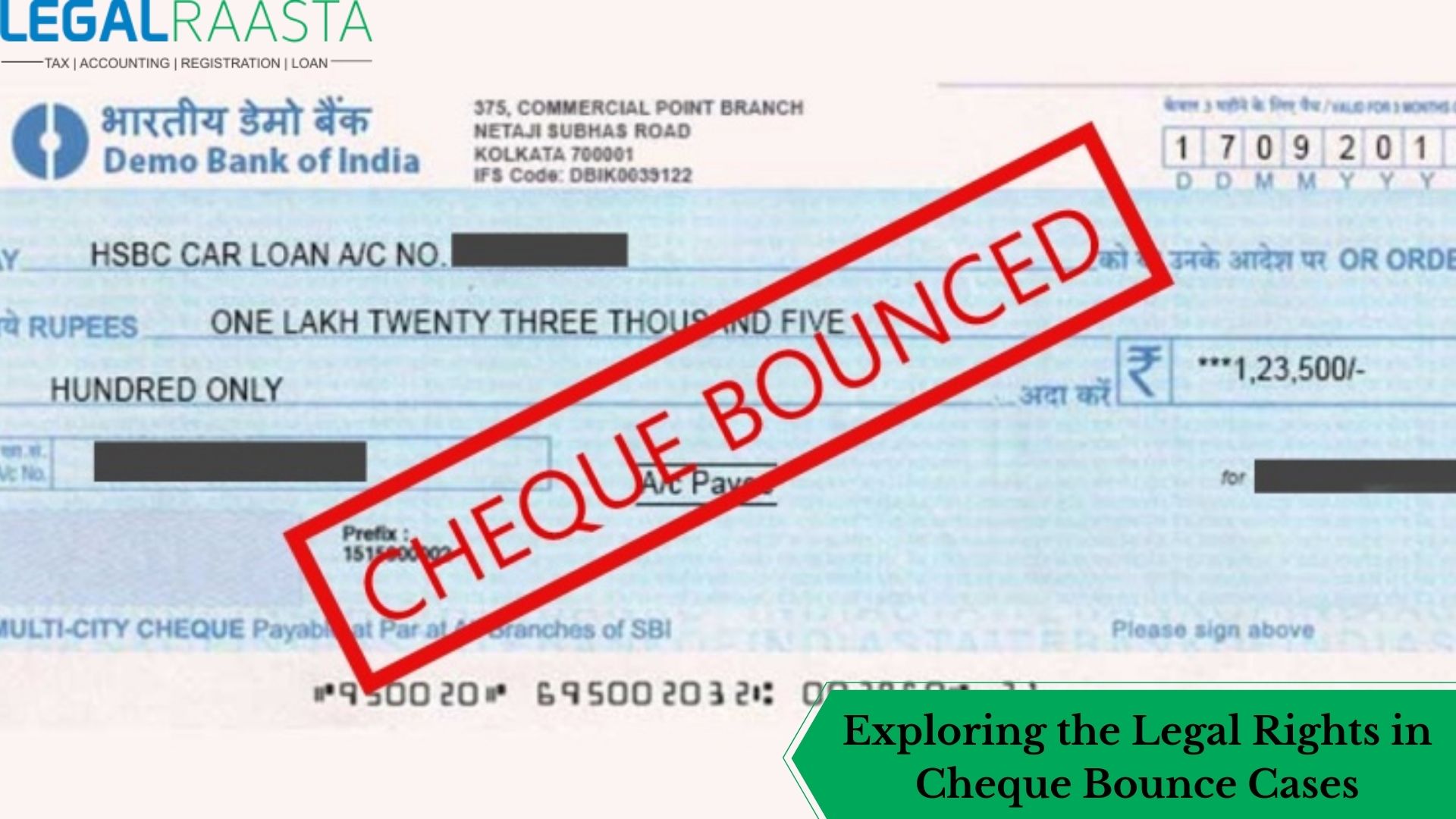 Exploring the Legal Rights in Cheque Bounce Cases
10-Feb-2021
Exploring the Legal Rights in Cheque Bounce Cases
10-Feb-2021 -
 Views of Indian Judiciary About Live-In Relationship
10-Feb-2021
Views of Indian Judiciary About Live-In Relationship
10-Feb-2021 -
 Passport Renewal: Procedure, Validity & Docum...
10-Feb-2021
Passport Renewal: Procedure, Validity & Docum...
10-Feb-2021 -
 Court Marriage in India: Procedure, Acts, Eligibil...
10-Feb-2021
Court Marriage in India: Procedure, Acts, Eligibil...
10-Feb-2021