Growth vs ISI Mark Registration: Are Manufacturers Ignoring It?
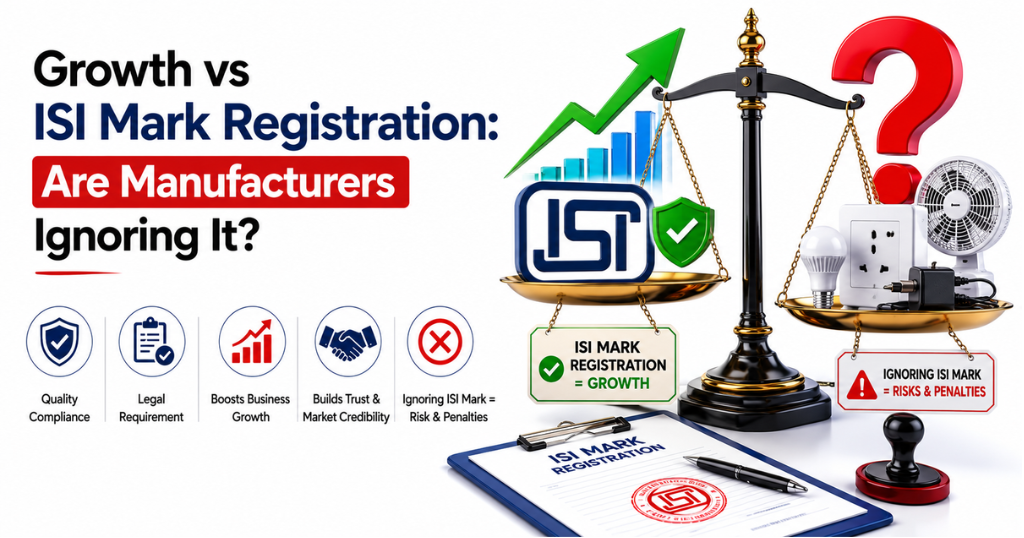
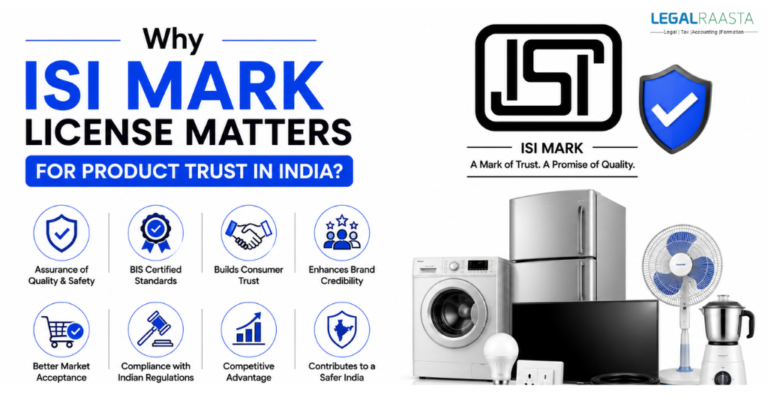
If you are an independent manufacturer, then during the manufacturing process, many things surely become challenging for you. Or if you might be facing any type of issue. Then, in that case, which certification or mark helps you a lot? Mainly, if you want to show your manufacturing process as fully protected and safe. Then, in terms of making you reliable and a perfect manufacturer, the Product Quality Certification in India surely helps you. Also, it acts as a guarantee of purity and quality for your business. Because it is a certified passport for market access, it builds consumer trust and provides a significant competitive edge. So, you don’t want to make things more complicated, you can go with the ISI Mark Registration.
Therefore, this piece of writing will teach you about how the ISI mark will help a manufacturer in its growth and success.
Thus, in terms of ensuring that the products’ safety and compliance in India, which are manufactured through various businesses, are 100% genuine. The ISI mark serves as a guarantee of safety among those products. The ISI mark, which is issued or provided by the Bureau of Indian Standards (BIS). Among other manufacturers, it also provides you with a competitive edge and benefits.
1. Why is ISI Mark Registration Considered a Critical Step for Manufacturing?
Now, learn why the ISI mark has become an important step before any manufacturing process and what its role is.
Mainly, the ISI mark in the manufacturing process acts as a guard against fraud and impurities. Also, because it is important for over 150 products for legal compliance, it serves as the most recognized symbol of quality, safety, and reliability for consumers. In the process of ISI marking, rigorous testing and facility inspection are conducted, ensuring the product complies with Indian Standards (IS).
Thus, now learn more briefly about the role of ISI mark registration and by which things it becomes a critical step for every manufacturer.
Legal and Regulatory Compliance
- Many products or items are very critical for public health, safety, and infrastructure. So, for the manufacturing of those types of products, the government has mandated ISI certification for certain product categories.
- If a person tries to do Manufacturing, importing, or selling of some mandatory products without the BIS Certification can result in significant fines. The fines can be up to ₹5,00,000 or more for repeat offenses, including product seizure/recall, and even imprisonment.
- Those business that wants to enter the wide indian market with their regulated goods, and many government and private procurement contracts require ISI mark registration.
Consumer Safety and Trust
- The mark of ISI also provides a third-party assurance that a product has undergone stringent testing and adheres to specific quality and safety benchmarks. Due to this, it reduces the risk of having defects, hazards, and potential accidents such as electric shocks.
- The ISI mark is also a powerful symbol of trust for Indian consumers. It also helps them make informed choices and build brand credibility and loyalty for the manufacturer.
Business and Commercial Advantages
- In this competitive market, the ISI-marked products are shown differently. This gives a manufacturer a different, significant competitive advantage over non-certified products.
- Following the quality control procedures that come with the ISI certification mainly improves overall manufacturing processes, leading to reduced product failures, defects, and returns. As it is mandatory to follow quality control procedures, they are required.
- Since many foreign markets accept BIS standards. So, in that case, adhering to Indian norms can promote international trade and increase a manufacturer’s export potential.
2. How the ISI Mark Registration Benefits Both a Regular and a Trusted Brand
Take a look at the benefits that ISI registration provides to both regular and trusted brands. And the ISI mark makes both these types of brands different.
Mainly, the ISI mark provides both types of brands with quality, safety, and reliability standards set by the Bureau of Indian Standards (BIS). Also, with legal compliance, market access, and enhanced consumer trust for both regular and trusted brands. Regardless of the size of the company, it provides both crucial benefits. Now, learn more briefly about the benefits that ISI certification provides to both these types of brands and businesses.
|
Benefits for a regular brand |
Benefits for a trusted brand |
|
In these crowded markets, for regular brands, the ISI mark acts as a third-party guarantee of quality. By making consumers more likely to choose an unfamiliar product over a non-certified alternative. |
The ISI mark shows the brand’s commitment to quality and safety among its customers and partners. Also, strengthening the confidence and loyalty of existing customers and encouraging repeat purchases. |
|
For many types of products that are sensitive. So, for those, the ISI mark is mandatory for sale in India. The certification allows a new brand to legally enter and operate in these regulated markets without facing penalties or product seizures. |
In many cases, it is seen that trusted brands also face legal challenges. So, in that case, the ISI certification acts as a legal protection for them. Also, validating that the product has passed all required tests and meets government standards. |
|
Among your non-certified competitors, the ISI mark provides you significant advantage. By helping your brand attract a broader customer base and establish initial market share. |
In the process of obtaining and maintaining your ISI certification, force a brand to follow the best practices and improve manufacturing processes. In terms of reducing defects, lower waste, and overall cost savings. |
|
Those who require the ISI mark include retailers, distributors, and government procurement agencies. Thus, for these, ISI opens up significant business opportunities that would be otherwise inaccessible. |
The ISI Mark Registration has also become a globally recognized certification. And it can help a trusted brand bolster its export potential and global credibility. |
3. So, What Should Manufacturers Really Do Next About the ISI Mark?
Thus, if you successfully get your ISI Mark Registration, then what should you really have to do next after getting your ISI mark?
- So, after getting your ISI mark certification, you have to check and confirm the products that fall under the mandatory list of the Bureau of Indian Standards (BIS). Then, after which you diligently pursue initial certification or annual renewal to ensure legal market access and avoid penalties. Also, always be aware of recent and upcoming QCO updates. Ensure that your product unit has an adequately equipped in-house testing lab with calibrated equipment.
- Thus, these are some steps that you have to take after obtaining your ISI mark certification. According to the guidelines of BSI, renewals and updates of ISI standards are very important. In terms of making your facility more reliable and legally strong. Timely renewal is very important before the expiry date of the ISI mark certification. So, this is a brief of the steps that are important after getting your ISI mark.
4. Want Smooth Manufacturing? Get Your ISI Mark Through LegalRaasta
LegalRaasta has the capabilities to help your business grow. While we do offer services such as ISI mark Certifications, we will take care of the financial aspects of your company so that you can focus on what is important. It can be difficult to find someone who understands the complexities of the marketplace, but we will provide you with professionals to keep you stable during uncertain times.
We specialise in more than solely performing calculations,
Want to apply for:
ISI Mark Registration? Want to register your business or create an LLP? Are you looking into registering an NBFC? All this and much, much more—you name it, we do it. Everything you need, including legal, compliance, and financial services, is provided from one location—with us.

Related Posts
Our Clients





Featured In