
How to Start a Pharma Company in India: Registration & Licensing Guide 2026
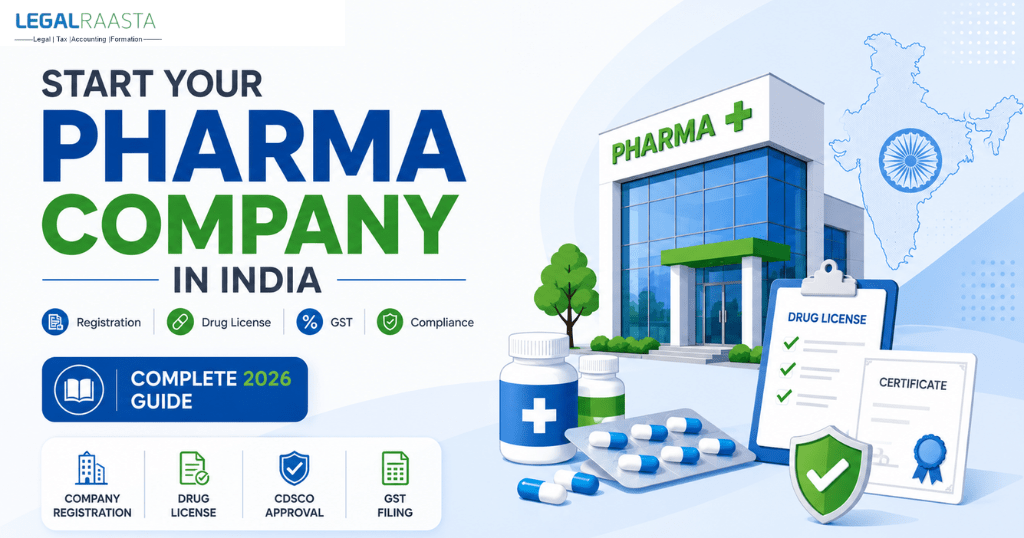
India’s pharma industry is worth more than $53 billion in 2025 and is among the fastest-growing industries in the world. From the medical profession to investors and even for the first-time entrepreneur, pharma company registration in India presents a vast opportunity, but it requires meticulous planning, licensing, and adherence to regulatory guidelines. In this guide, you will learn all about starting a pharma company in India in 2026, including choosing the business model, obtaining a drug licence, and CDSCO approvals. From start to finish, LegalRaasta’s expert team can manage your entire pharma company registration process — you can focus on growing your business.
Why Start a Pharma Company in India?
Besides being a vast domestic pharmaceutical market, India is the world’s largest provider of generic medicines, accounting for more than 50% of the global demand for vaccines and 20% of global exports of generics. Market size is not the only factor why entrepreneurs decide to start a pharma company in India:
- India’s share in global vaccine demand is more than 50%, and in generic medicine exports, it is 20%.
- The government provides PLI schemes (Production Linked Incentive) that are very lucrative for registered pharma companies.
- Several low-investment entry points exist, ranging from PCD franchise to marketing companies.
- The pharma company registration online has become much faster through the ONDLS and SUGAM portals.
- Strong domestic demand from a population of 1.4 billion.
Types of Pharma Businesses in India
It’s crucial to have a thorough knowledge of the various types of pharma companies before you start the registration procedure. There are licensing requirements, the level of investment, and operational structures that are unique to each model.
|
Business Type |
Investment Range |
Key Requirement |
|
PCD Pharma Franchise |
₹20,000 – ₹1,00,000 |
Drug licence + GST |
|
Pharma Marketing Company |
₹1 lakh – ₹5 lakhs |
Wholesale drug licence + brand |
|
Wholesale Drug Distribution |
₹3 lakhs – ₹10 lakhs |
Drug licence + pharmacist |
|
Retail Pharmacy |
₹5 lakhs – ₹15 lakhs |
Retail drug licence + D.Pharm |
|
Small-Scale Manufacturing |
₹1.2 Cr – ₹1.5 Cr |
Manufacturing licence + GMP |
|
Ayurvedic / Nutraceutical |
₹2 lakhs – ₹10 lakhs |
Ayurvedic licence + FSSAI |
One of the easiest ways to get into the game is the pharma marketing company registration process in India, which does not require a lot of capital investment, manufacturing facilities, or a complex licensing process like production.
Step-by-Step Process to Start a Pharma Company in India
Understanding how to start a pharma company requires navigating both central and state-level regulatory systems. From 2025, all drug licensing applications are to be compulsorily made through the Online National Drugs Licensing System (ONDLS), and hence, the registration of a pharma company online is the standard procedure. Let’s go through it step-by-step:
Step 1 – Choose Business Structure
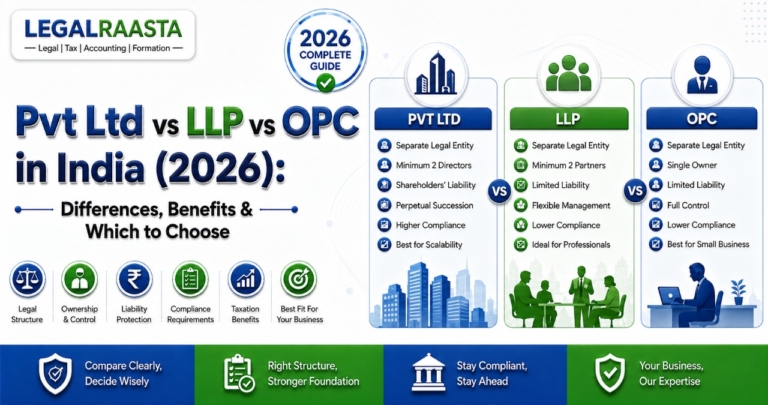
Choose the right legal structure. A Private Limited Company is advisable for scalability and for investors’ credibility. For smaller operations, sole proprietorship and LLP are suitable options.
|
Business Structure |
Best For |
Key Feature |
|
Small retail pharmacy or PCD |
Easiest to set up, unlimited liability |
|
|
2–5 co-founders |
Shared responsibility, moderate compliance |
|
|
Marketing companies |
Limited liability, flexible structure |
|
|
Manufacturing or scaling businesses |
Most preferred, limited liability, investor-friendly |
|
|
Solo entrepreneurs with large ambitions |
Single founder, limited liability |
Step 2 – Register Your Company
Submit a file via the MCA21 portal on the SPICe+ form. Get DSC/DIN for directors. Registration charges for the government are usually from ₹8,000 to ₹15,000.
Step 3 – Obtain Drug Licence for Your Pharma Company
The drug licence for pharma company operations is the most important approval obtained from the State Drug Controller under the Drugs and Cosmetics Act, 1940. Since 2025, all applications are compulsory to be made via the ONDLS portal.
- Manufacturing licence (Form 25/27): Requires GMP-compliant premises, qualified staff (B.Pharm/M.Pharm), and a Site Master File
- Wholesale/retail licence: Requires a registered pharmacist (D.Pharm minimum), minimum 10 square meters of premises, and site layout documents
Step 4 – GST Registration
Applicable to all Pharma companies with an annual turnover exceeding ₹20 lakh. The majority of drugs are subject to 5%–12% GST. Registration is free on the Government portal.
Step 5 – Trademark Registration
Guard your brand name and product identity with CGPDTM. The government fee for startups is ₹4,500 per class. Important for brand building in the long run.
Step 6 – CDSCO Registration
Drug importers, new drug applicants, biological manufacturers, and foreign manufacturers should have CDSCO registration. The applications are submitted on the SUGAM portal. Key documents include Forms 40 & 41, factory layout, and a valid wholesale drug licence.
Step 7 – Open a Business Bank Account
A dedicated current account is required for GST compliance, vendor payments, and institutional credibility.
Documents Required to Start a Pharma Company
Preparing all the documents beforehand makes the registration process of a pharma company much faster. Here is a full list of all the items by category:
Personal Documents
- Aadhaar Card, PAN Card of directors/partners
- Passport-size photographs
- Residential address proof
Business Documents
- Certificate of Incorporation / Partnership Deed
- MOA & AOA, GST Certificate
- Office address proof (rent agreement + utility bill)
- Premise photographs and site layout plan
Professional / Technical Documents
- Qualification certificates of a competent person (B.Pharm / M.Pharm / D.Pharm)
- Appointment letter and experience certificate of a pharmacist
- Site Master File (for manufacturing units)
- Free Sale Certificate (for import applications)
Licences Required for Pharma Company Registration
These are the essential licences for a pharma company in India to run its business legally. A summary:
|
Licence |
Issuing Authority |
Approx. Cost |
|
Drug Manufacturing Licence |
State Drug Controller + CDSCO |
₹5,000–₹10,000 |
|
State Drug Controller |
₹3,000–₹5,000 |
|
|
GSTN Portal |
Free |
|
|
MCA |
₹8,000–₹15,000 |
|
|
Trademark Registration |
CGPDTM |
₹4,500–₹9,000 |
|
CDSCO SUGAM Portal |
Variable |
|
|
FSSAI |
₹100–₹2,000/year |
Minimum Investment to Start a Pharma Company in India
A common question asked is what the minimum investment is to start a pharma company in India? It depends greatly on the business model selected. Here’s a realistic model-wise investment breakdown:
- PCD Franchise: ₹20,000–₹1,00,000 (stock + drug licence + promotional materials)
- Pharma Marketing Company: ₹1–₹5 lakhs (office setup, branding, licences)
- Small Manufacturing Unit: ₹1.2–₹1.5 crores (land, machinery, regulatory approvals, staff)
Key recurring costs to budget for:
- Qualified pharmacist salary: ₹25,000–₹35,000/month
- Working capital reserve: ₹5–₹7 lakhs for the first-year brand building
- Annual licence renewals and GST filing compliance
Ongoing Compliance Requirements for Pharma Companies
The first licences are the starting point. A pharma company in India needs to satisfy an ever-evolving group of regulatory, tax, and quality responsibilities:
- GMP Compliance: Manufacturing units are required to follow Schedule M of the Drugs and Cosmetics Act, which lays down the requirements of quality control, equipment, personnel, and premises.
- Annual Licence Renewal: State drug licences are normally issued for a set duration and should be renewed prior to their expiration through the ONDLS portal.
- GST Filing: Monthly/quarterly GST returns (GSTR-1, GSTR-3B) are required to be filed on a regular basis in order to avoid penalties.
- Pharmacovigilance: All registered manufacturers should report adverse drug reactions to CDSCO.
- Drug Recall Procedures: Any quality defect needs to be escalated, and the product needs to be recalled as per CDSCO guidelines.
- Labelling Compliance: Drug labels should strictly adhere to the Drugs and Cosmetics Rules with the batch number, manufacturing date, expiry date, MRP, and storage conditions.
- Import/Export Documentation: Companies engaged in imports should carry current import licenses, Free Sale Certificates, and product registrations.
- Income Tax & ROC Filings: Annual financial statements, ROC returns (MCA filings), and income tax returns should be filed timely.
Failure to comply may lead to cancellation of the licence, product recall, significant fines, or even criminal prosecution.
Common Challenges in Starting a Pharma Company in India
The pharma industry is definitely very promising, but entrepreneurs can face challenges such as these:
- Complex documentation: Application delays are most commonly due to missing or incorrect documents at state drug controller offices and CDSCO.
- Frequent regulatory updates: India’s pharmaceutical regulations evolve regularly. Compliance is the regular monitoring of CDSCO circulars and state FDA notifications.
- State-level variation: Drug licensing procedures differ widely among States, not only in timelines, but also in inspections and fees.
- Limited in-house expertise: Small and medium pharma companies often lack dedicated regulatory affairs professionals, making them vulnerable to compliance gaps.
- Cash flow management: Pharmaceuticals have long credit cycles. Distributors and hospitals may have credit terms between 60 and 90 days, which puts pressure on the cash flow for new firms.
- Quality control setup: Building and maintaining a compliant quality control laboratory is capital-intensive and technically demanding for new manufacturers.
Benefits of Registering a Pharma Company in India
On the positive side, a well-registered pharma company in India has long-term benefits, even after the initial difficulties:
- Legal protection: A registered company can have its IP protected against counterfeit action and create a contract.
- Bank credit access: Registered companies with proper licences can access working capital loans, term loans, and government-backed MSME credit schemes.
- Brand credibility: Registered entities that have drug licences are preferred by doctors, hospital procurement committees, and distributors.
- Export eligibility: Exports to the regulated and semi-regulated markets are available only to companies with valid manufacturing licenses and GMP certificates.
- Government scheme benefits: PLI scheme subsidies, pharma cluster infrastructure, and MSME benefits are only available to registered businesses.
- Investor attraction: A Private Limited Company with clean regulatory compliance is far more attractive to angel investors and VCs than an unregistered operation.
- Scalability: A legally protected and organised expansion of the product range, new fabrication lines, and new markets for a registered company.
DIY vs. Expert-Assisted Pharma Registration
|
Factor |
DIY Registration |
LegalRaasta Expert Assistance |
|
Documentation Accuracy |
High risk of errors |
Verified and complete |
|
Processing Time |
Longer due to rejections |
Faster with proactive follow-up |
|
Regulatory Knowledge |
Limited |
Deep state + central expertise |
|
Cost |
Lower upfront |
Transparent, all-inclusive |
|
Ongoing Compliance |
Self-managed |
Supported year-round |
|
Risk of Rejection |
High |
Minimized |
Why Choose LegalRaasta for Pharma Company Registration?
From company incorporation to drug licences, GST, trademark, CDSCO approvals, the registration route in pharma is multi-layered and requires knowledge of several domains to complete the process successfully. LegalRaasta simplifies this journey through:
- End-to-end registration support: From company formation to drug licence and CDSCO registration, LegalRaasta manages the entire process under one roof.
- Expert regulatory team: Dedicated professionals with deep knowledge of the Drugs and Cosmetics Act, ONDLS portal, and state-specific procedures.
- Faster turnaround: With adequate documentation and timely follow-ups with authorities, approvals are sped up.
- Clear pricing: No hidden costs or charges. There is no hidden cost at any point.
- Ongoing compliance support: Annual renewals, GST filings, ROC returns, and regulatory monitoring services to keep your business compliant year-round.
- Nationwide coverage: Whether you are registering in Maharashtra, Gujarat, Himachal Pradesh, Telangana, or any other state, LegalRaasta has local expertise.
Let LegalRaasta take care of paperwork and regulatory hassles and concentrate on creating India’s next big pharma brand.
Conclusion
Starting a pharma company in India in 2026 is a lucrative opportunity that has been supported by the robust domestic market and growing regulatory environment. The first thing to get right when you start a pharma company, as a small PCD or even a full-blown manufacturing facility, is your pharma company registration. Selecting the proper structure, acquiring permits, doing everything right the very first day, etc.
Contact LegalRaasta today and begin the journey towards a legally sound and lucrative pharmaceutical enterprise.
Frequently Asked Questions (FAQs)
Q1. What is the cost of pharma company registration in India?
The cost of pharma company registration starts from ₹25,000 to ₹75,000 with initial approvals, including incorporation of the company, drug licence, and GST registration. While investments in infrastructure and regulatory permissions are much higher for manufacturing units.
Q2. Who is eligible to open a pharma company?
Pharma Company Registration can be done by any citizen of India who is above 18 years of age. However, a qualified pharmacist (D.Pharm or B.Pharm) must be employed on the premises. Units also rely on B.Pharm or M.Pharm-qualified technical staff.
Q3. How to start a business in pharma with no prior experience?
For the initial pharma company registration, opt for less risky models such as PCD or wholesale distribution. Even with experience in the field, the expertise of regulatory consultants and a licensed pharmacist significantly diminishes compliance risk.
Q4. How to start a small pharma company in India?
Start with a PCD franchise or marketing company. Register the entire pharma company, get the wholesale drug licence from ONDLS, register for GST, and network with a licensed manufacturer for supplying the products legally.
Q5. How much money is needed to start a pharma company?
The minimum investment to start a pharma company in India ranges from ₹20,000 for a PCD franchise to ₹1.5 crores for a small manufacturing unit. The marketing firm usually needs you to invest ₹1–₹5 lakhs, which also covers the regulatory and branding expenses.
Q6. How to start a 3rd party pharma company?
Apply for business registration and to get a wholesale drug licence and start the pharma company registration for a third-party model. Purchase products from a licensed manufacturer that meets GMP standards, and sell these products under your own label.
Q7. Can I start my own pharmaceutical company without a pharmacy degree?
Yes. The incorporation of a pharma company as a director or owner is possible without a degree in pharma sciences. However, the Drugs and Cosmetics Act mandates employing a qualified pharmacist on record — D.Pharm for retail/wholesale, B.Pharm/M.Pharm for manufacturing.
Q8. How to be successful in the pharmacy business?
Emphasis on product quality, compliance, and good distributor relationships. Focus on higher margin products, such as nutraceuticals or gynaecology, ensure proper Pharma Company Registration, and invest in a trustworthy medical representative workforce to push prescriptions.
Q9. What degree is required to open a pharmaceutical company?
Owners do not need to have any particular qualification to start a pharma company registration. The law stipulates a D.Pharm or a B.Pharm qualified on the premises as a pharmacist in retail and wholesale. For manufacturing supervisory jobs, consider a Pharm or other applicable degree.
Q10. What is the pharma marketing company registration process in India?
The business incorporation procedures for a pharma marketing company include business incorporation with MCA, a wholesale drug license with ONDLS, GST registration, and trademark registration. There will be no manufacturing plant required; products will be supplied by a licensed third-party manufacturer.

Related Posts
 Company Registration
ROC Registration in India: Process, Documents, Eligibility & Key Requirements
Read More → Company Registration
How to Improve Company Compliance in India: A Complete Guide for Businesses
Read More →
Our Clients






Featured In