How to Start a Herbal Cosmetic Business in India: Complete Guide 2026
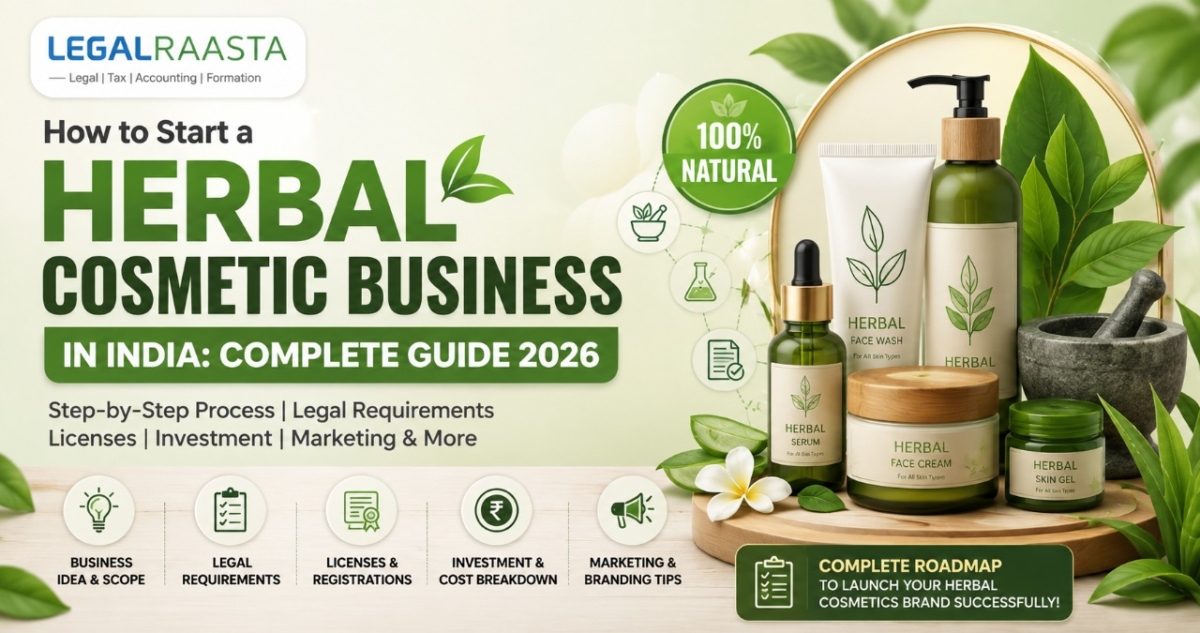
India’s herbal cosmetic market crossed Rs 35,000 crore in 2024 and is growing at over 12 percent annually. Consumers are actively moving away from chemical-heavy products. They want turmeric face washes, ashwagandha hair oils, neem soaps, and rose water toners. That demand is real, and it is not slowing down. Starting a herbal cosmetic business in India is genuinely accessible.
You do not need a factory from day one. You do not need crores of investment. But you do need the right licenses, the right manufacturing setup, and properly labeled products before you sell a single bottle. LegalRaasta helps herbal cosmetic brands get FSSAI registration, manufacturing licenses, trademark protection, and full legal setup done correctly from day one.
Why Start a Herbal Cosmetic Business in India?
The numbers make the case plain.
- India’s herbal and natural beauty segment grows faster than the overall cosmetics market
- Post-COVID consumer preference for chemical-free products has shifted permanently
- Ingredients like neem, turmeric, aloe vera, and sandalwood are abundantly available and cheap domestically
- D2C brands on Instagram and quick commerce platforms have proven the model works at small scale
- Export demand from the US, UK, and Gulf for Indian herbal products is strong and growing
Types of Herbal Cosmetic Products You Can Sell
|
Product Category |
Popular Products |
Profit Margin Range |
|
Skincare |
Face wash, serum, moisturiser, scrub, toner |
50 to 70% |
|
Haircare |
Oil, shampoo, conditioner, hair mask |
45 to 65% |
|
Body care |
Body lotion, soap, body scrub, bath salts |
40 to 60% |
|
Lip and eye care |
Lip balm, kajal, eye cream |
55 to 75% |
|
Baby and sensitive skin |
Baby oil, rash cream, mild soap |
50 to 65% |
|
Aromatherapy |
Essential oils, diffuser blends |
60 to 80% |
Licences and Registrations Required for a Herbal Cosmetic Business
Every herbal cosmetic business in India needs specific registrations before selling.
|
License / Registration |
Authority |
When Required |
Approx Cost |
|
FSSAI Registration or License |
FSSAI |
If any edible or ingestible product is included |
Rs 100 to Rs 5,000 per year |
|
Cosmetic Manufacturing License (Form 32) |
State Licensing Authority |
If manufacturing in-house |
Rs 3,000 to Rs 10,000 |
|
Loan License (Form 31) |
State Licensing Authority |
If outsourcing manufacturing |
Rs 1,500 to Rs 5,000 |
|
GST Council |
Once turnover crosses Rs 20 lakh |
Free |
|
|
Ministry of MSME |
Recommended for all small units |
Free |
|
|
Trade Marks Registry |
Brand name and logo protection |
Rs 4,500 for individuals |
|
|
Drug License (if Ayurvedic medicines involved) |
State Drug Controller |
If products make therapeutic claims |
Rs 5,000 to Rs 15,000 |
Herbal Cosmetic Manufacturing License in India
|
Manufacturing Route |
License Required |
Key Requirements |
When to Choose |
|
In-house manufacturing |
Form 32 (Cosmetic Manufacturing License) |
Factory space, qualified technical staff, QC setup per Schedule M |
When you want full control over formulation and production |
|
Third-party / Loan license |
Form 31 (Loan License) |
Agreement with a licensed manufacturer, your own brand supervision |
When starting small with limited capital investment |
For a herbal cosmetic business in India starting from scratch, the loan license route under Form 31 is the most practical entry point.
Regulatory and Quality Requirements for Herbal Cosmetics
The Drugs and Cosmetics Act, 1940 and the Cosmetics Rules, 2020 govern all cosmetics sold in India. Herbal does not mean exempt. Every herbal cosmetic product must:
- Comply with Schedule Q (permissible colourants, preservatives, and UV filters)
- Use INCI (International Nomenclature of Cosmetic Ingredients) names on labels
- Pass safety and stability testing before going to market
- Be manufactured in facilities meeting GMP standards under Schedule M
Investment Required to Start a Herbal Cosmetic Business
|
Setup Type |
Investment Range |
What It Covers |
|
Home-based with loan license |
Rs 50,000 to Rs 1,50,000 |
Loan license, GST, branding, packaging, initial stock |
|
Small branded operation |
Rs 2,00,000 to Rs 8,00,000 |
Loan, license, testing, trademark, packaging, website, inventory |
|
In-house manufacturing |
Rs 10,00,000 to Rs 30,00,000 |
Factory setup, Form 32 license, QC equipment, staff, inventory |
Herbal Cosmetic Labelling Requirements (Cosmetics Rules 2020)
Every label on a herbal cosmetic business in India product must contain:
- Product name and complete ingredient list in INCI order
- Net content by weight or volume
- Manufacturer’s name and address
- Country of origin (for imports)
- Manufacturing date and best before date
- Batch number
- Directions for use where necessary
- Warnings if required by the product category
- CDSCO import registration number (for imported products)
In-House vs Third-Party Manufacturing
|
Factor |
In-House Manufacturing |
Third-Party (Loan License) |
|
Investment needed |
High (Rs 10 lakh and above) |
Low (Rs 50,000 to Rs 3 lakh) |
|
Timeline to market |
6 to 12 months |
1 to 4 months |
|
Formulation control |
Full control |
Shared or limited |
|
License required |
Form 32 |
Form 31 |
|
Quality oversight |
Direct |
Dependent on third-party standards |
|
Best for |
Scaling brands with capital |
New entrants, D2C brands starting lean |
How to Start a Herbal Cosmetic Business: Step by Step
These are the actual steps in the correct sequence. Skipping steps or doing them out of order wastes money.
Step 1: Choose Product and Target Market
Pick three to five hero products. Choose a specific buyer: women 25 to 40, budget-conscious natural buyers, premium gifting segment, baby care, or export market. Different buyers need completely different positioning.
Step 2: Decide on Manufacturing Route
Loan license for a lean start. In-house for scale. Match this decision to your actual capital, not your projections.
Step 3: Develop and Test Formulation
Work with a cosmetic chemist or formulation expert. Stability test (heat, light, shelf life). Safety test (patch test, microbiological testing). This step is mandatory under the Cosmetics Rules 2020 before commercial production.
Step 4: Get All Required Registrations
File in this order: Udyam MSME first, then GST registration, then Form 31 or Form 32 cosmetic license application, then FSSAI if applicable, then trademark.
Step 5: Create Compliant Packaging
Every label must meet Cosmetics Rules 2020 requirements listed above. Have labels reviewed before printing.
Step 6: Build Your Selling Channel
Instagram and WhatsApp for direct sales. Amazon and Flipkart for reach (both require GST). Myntra for fashion-adjacent beauty. Quick commerce for local instant delivery. Corporate gifting for bulk B2B revenue.
How to Sell Herbal Cosmetics Online and Offline
|
Channel |
What It Needs |
Best For |
|
Instagram and WhatsApp |
Good content, FSSAI/license number on packaging |
D2C, premium, gifting |
|
Amazon and Flipkart |
GST mandatory, brand approval |
Scale, discovery |
|
Nykaa |
Brand approval, quality packaging |
Premium positioning |
|
Local pharmacies and wellness stores |
Basic business registration |
Consistent offline volume |
|
Corporate gifting |
Samples and direct outreach to HR teams |
High-value bulk orders |
Common Mistakes to Avoid
Make sure to follow these to prevent delays.
Making therapeutic claims on cosmetic products
One sentence like “cures acne” converts your cosmetic into a drug requiring a drug license. Avoid it entirely.
Skipping stability testing
Products that separate, change colour, or grow mould within six months of manufacture damage your brand fast. Test properly before launch.
Printing labels before getting license numbers
The cosmetic license number and FSSAI number must appear on labels. Print labels only after these are confirmed.
Using a generic name without a trademark
Someone else can file your brand name before you. File a trademark as early as possible, ideally before your first sale.
2026 Regulatory Updates for Herbal Cosmetics in India
The FSSAI First Amendment Regulations, notified in March 2026, bring changes to labelling rules for certain food-adjacent products. If any of your herbal products cross into the food or nutraceutical category (edible oils, herbal tonics, herbal drinks), check the updated FSSAI labelling requirements before printing packaging. The effective date for implementation is July 1, 2027, giving businesses a transition window.
Separately, CDSCO has tightened scrutiny on products that blend cosmetic and drug claims. Products positioning themselves as “Ayurvedic cosmetics” with medicinal language are being reviewed more carefully for correct classification under the Drugs and Cosmetics Act.
Why LegalRaasta for Your Herbal Cosmetic Business
LegalRaasta handles every compliance step so you launch legally and on time:
- Udyam MSME registration
- Form 31 loan license or Form 32 manufacturing license application with the State Licensing Authority
- GST registration
- FSSAI registration or state license
- Trademark filing under Class 3 for cosmetics
- Label compliance review before printing
- Drug license if your product range crosses into Ayurvedic medicines
Conclusion
A herbal cosmetic business in India is one of the more accessible manufacturing businesses you can start in 2026. The market is real. The margins are strong. And the regulatory path, while specific, is navigable with the right preparation.
The two things that sink most early-stage herbal brands are wrong product classification and unlicensed sales. Both are avoidable. Get the license first. Test the formulation. Print compliant labels. Then sell. Connect with LegalRaasta today and get every license and registration for your herbal cosmetic business done correctly so your brand launches without legal risk.
Frequently Asked Questions
1. What licenses are required to start a herbal cosmetic business in India?
A herbal cosmetic business in India needs a Form 31 loan license or Form 32 manufacturing license from the State Licensing Authority, GST registration, and FSSAI registration if the product range includes edible items.
2. What is the difference between Form 31 and Form 32 for herbal cosmetics?
For a herbal cosmetic business in India, Form 31 is a loan license for brands that outsource manufacturing to a licensed facility. Form 32 is the full manufacturing license for businesses with their own production setup.
3. How much does it cost to start a herbal cosmetic business in India from scratch?
A lean herbal cosmetic business in India using the loan license route costs Rs 50,000 to Rs 1,50,000. A properly branded operation with packaging, testing, trademark, and initial stock costs Rs 2 lakh to Rs 8 lakh.
4. Is FSSAI registration required for herbal cosmetics in India?
FSSAI registration is not required for purely topical cosmetics. A herbal cosmetic business in India selling face creams, shampoos, or soaps needs a cosmetic manufacturing license, not FSSAI.
5. Can a herbal cosmetic product make medicinal claims in India?
No. Making therapeutic claims like “treats acne” or “cures dandruff” converts the product from a cosmetic to a drug under the Drugs and Cosmetics Act. A herbal cosmetic business in India that does this needs a drug license instead of a cosmetic license.
6. What is the profit margin in a herbal cosmetic business in India?
A herbal cosmetic business in India targeting the premium natural segment earns 50 to 70% gross margins on skincare products. Lip and aromatherapy products earn up to 80%. Margins depend on whether you use couture ingredients, custom formulation, and direct-to-consumer channels versus wholesale distribution.
7. How long does it take to get a cosmetic license in India?
A Form 31 loan license for a herbal cosmetic business in India typically takes 30 to 90 days, depending on the state and completeness of the application. A Form 32 manufacturing license takes longer due to facility inspection.
Related Posts

Our Clients


Featured In