
Manufacturing Compliance in India 2026: Complete Legal & Regulatory Checklist
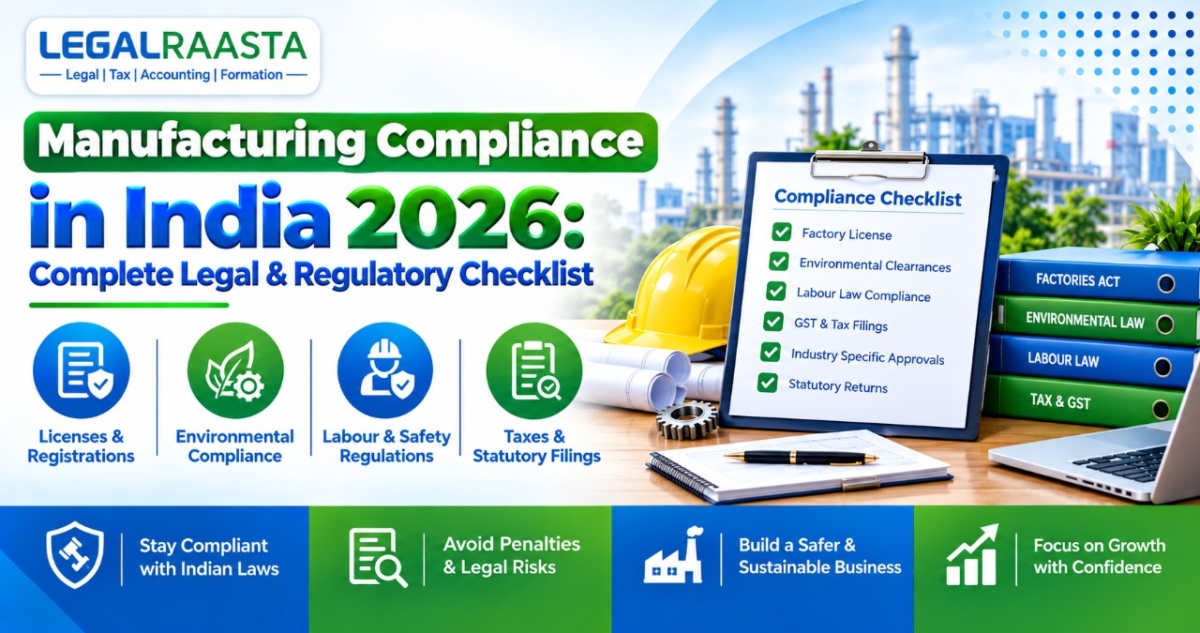
Running an industrial production unit in 2026 requires following strict state and central government rules. You cannot afford to skip legal permissions if you want your plant to operate without legal trouble. Setting up a factory involves getting multiple licenses, maintaining worker safety standards, paying taxes on time, and managing waste disposal properly. Government departments now use digital portals to monitor industrial units in real-time. This guide gives you a complete operational Manufacturing Compliance in India checklist to keep your unit 100% legal and audit-ready. Consult LegalRaasta today to fast-track your factory setup and stay 100% audit-ready.
Quick Answer For Manufacturing Compliance in India: At a Glance Summary
|
Compliance Category |
Governing Authority |
Key Portal / Form |
Processing Time |
Primary Objective |
|
Ministry of Corporate Affairs |
SPICe+ (MCA Portal) |
3 – 7 Days |
Legal Business Existence |
|
|
Factory Registration |
State Chief Inspector of Factories |
State Single Window Portal |
15 – 30 Days |
Operational Workplace Permission |
|
Pollution Clearance (CTE/CTO) |
State PCB / CPCB |
30 – 60 Days |
Environmental Safety Release |
|
|
Tax & Duties |
Central Board of Indirect Taxes |
GST Portal |
3 – 7 Days |
Indirect Tax Registration |
|
Waste Management |
Central Pollution Control Board |
EPR Portal |
15 – 30 Days |
Waste Target Compliance |
What Is Manufacturing Compliance in India?
Manufacturing compliance in India means following all statutory laws, regulatory frameworks, environmental policies, and labor welfare guidelines set by government bodies. It spans the entire life cycle of an industrial unit. You must follow rules right from plant design, construction, machinery installation, to daily production and effluent discharge.
Fulfilling manufacturing compliance in India protects factory owners from costly shutdown notices, heavy government fines, and criminal charges. It ensures that workers stay safe in hazardous factory environments and that industrial waste does not pollute surrounding land or water resources. Being fully compliant also makes it easier to secure bank loans, raise investment, and land large corporate contracts.
2026 Recent Updates in Manufacturing Regulatory Policies
Government agencies updated several industrial norms in 2026 to improve ease of doing business while raising environmental and safety standards. Digital monitoring systems have replaced manual physical inspections in most industrial zones across India.
- Integrated EPR Tracking: All Extended Producer Responsibility obligations for plastic, battery, and electronic waste must now be updated quarterly on central CPCB portals.
- Automated CTO Renewals: State pollution control boards now grant auto-renewals for Consent to Operate (CTO) to Green and Orange category industries that maintain clean digital compliance logs.
- Unified Labour Inspections: Random physical inspections under the updated central labor codes are now triggered automatically via the online inspection system based on risk scoring.
- Stricter BIS Quality Control Orders (QCOs): The ministry added over 100 industrial raw materials and finished goods to the mandatory BIS listing for manufacturing compliance in India.
Key Manufacturing Licenses and Registrations
Setting up an industrial plant requires securing preliminary legal permissions from central, state, and local authorities before starting production.
Company Incorporation & Legal Entity
You need a recognized legal entity before applying for industrial permissions. Most factory owners choose Private Limited Company or LLP structures to protect personal assets and raise business capital easily. You must register through the SPICe+ form on the Ministry of Corporate Affairs portal. Once registered, you receive your PAN, TAN, and Certificate of Incorporation. You can complete your Company Registration with expert assistance to ensure proper capital structuring from day one.
Factory License under Factories Act 1948
Every plant using power with 10 or more workers, or 20 or more workers without power, must secure a valid license. You must submit your factory building plans to the State Chief Inspector of Factories for approval first. The inspector checks ventilation, emergency exits, machine spacing, and worker safety provisions. Securing your Factory License takes around 15 to 30 days once plan approvals are completed.
Pollution Control NOC (CTE and CTO)
Industrial units generate waste, air emissions, or liquid effluent during daily production. You must apply for Consent to Establish (CTE) before laying factory foundations. After installing machinery and effluent treatment systems, you must apply for Consent to Operate (CTO). These approvals are governed under the Environment Protection Act, 1986. State boards classify factories into Red, Orange, Green, and White categories based on pollution risk levels.
BIS Certification & Quality Standards
The Bureau of Indian Standards enforces strict quality rules for industrial goods sold in the Indian market. If your product falls under a mandatory Quality Control Order (QCO), you cannot sell or export it without the ISI mark or BIS registration. The process involves testing factory samples in recognized laboratories and hosting an physical plant audit by BIS officers. Getting BIS Certification protects your brand from product seizures and legal penalties.
FSSAI Food Manufacturing License
If your factory processes food items, beverages, or dietary supplements, you need an FSSAI Central or State License. FSSAI officers inspect raw material storage areas, water quality testing records, and worker hygiene facilities before issuing the license. You must maintain food safety management system (FSMS) logs continuously during daily operations.
Factory and Workplace Safety Compliance
Workplace safety laws protect factory laborers from machinery hazards, fire outbreaks, and toxic exposure. Factory managers must establish structured safety protocols across every production floor.
|
Safety Compliance Category |
Statutory Requirement |
Regulatory Framework |
Verification Method |
|
Machine Safety |
Guarding on moving gears and flywheels |
Factories Act, 1948 |
Inspectorate Audits |
|
Fire Protection |
Fire NOC, hose reels, fire alarms, hydrants |
State Fire Safety Rules |
Annual Fire Inspection |
|
Chemical Safety |
Safety Data Sheets (SDS) and bunded storage |
Hazardous Chemical Rules |
Bi-Annual Board Log |
|
Medical Facilities |
On-site medical room or trained first-aid team |
Factory Medical Rules |
Medical Officer Logbook |
|
Personal Protection |
Safety shoes, helmets, goggles, and gloves |
Factory Safety Guidelines |
Daily Site Check |
Labour Law Compliance for Industrial Units
Managing industrial factory labor involves following statutory central codes to safeguard worker wages, health, safety, and social security benefits.
Code on Occupational Safety, Health and Working Conditions
This law combines older labor rules into a clean legal framework. Factory owners must issue written appointment letters to every worker on their payroll. You must provide free annual medical health checkups for employees above a certain age limit. You must also maintain clean drinking water facilities, adequate washrooms, and dedicated canteen spaces for large workforces. Employers must register their establishment on the government Shram Suvidha Portal to manage labor logs digitally.
EPF and ESIC Statutory Registrations
Registration under Employees’ Provident Fund (EPF) is mandatory for factories employing 20 or more persons. Employees’ State Insurance Corporation (ESIC) registration applies to factories with 10 or more workers drawing monthly wages within legal limits. Employers must deduct worker contributions from monthly wages and deposit them along with the matching company share by the 15th of every month.
Minimum Wages and Payment Regulations
You must pay state-mandated minimum wages to skilled, semi-skilled, and unskilled factory workers. State governments update minimum wage rates twice a year based on variable dearness allowance. Salaries must be paid into worker bank accounts by the 7th or 10th day of each month. Deducting unauthorized amounts from wages is strictly illegal under Indian labor laws.
Environmental & Waste Management Compliance
Factories must process and dispose of toxic chemical effluent, solid waste, and packaging waste without causing environmental damage.
|
Waste Streams |
Primary Regulation |
Statutory Requirement |
Filing Portal |
|
Hazardous Chemical Waste |
Hazardous Waste Rules 2016 |
Secure storage & certified disposal |
Annual Form 4 Filing |
|
Plastic Packaging Waste |
Plastic Waste Management Rules |
Plastic recycling targets |
Central EPR Registration Portal |
|
E-Waste / Industrial Electronics |
E-Waste Management Rules 2022 |
Authorized dismantler handover |
CPCB EPR Portal |
|
Liquid Factory Effluent |
Water Act 1974 |
Zero Liquid Discharge / ETP operation |
State PCB Monthly Logs |
GST and Tax Compliance for Manufacturers
Tax compliance for manufacturing units requires managing purchase invoices, calculating Input Tax Credit (ITC), issuing e-way bills, and filing tax returns on time.
|
Tax Requirement |
Applicability Criteria |
Form / Portal Used |
Filing Deadline |
|
Annual sales above statutory limits |
GST REG-01 Portal |
Before starting sales |
|
|
E-Way Bill Generation |
Goods movement value above ₹50,000 |
E-Way Bill Portal |
Before vehicle dispatch |
|
E-Invoicing System |
Turnover matching current CBIC limit |
Invoice Registration Portal |
Real-time billing |
|
Registered industrial units |
GSTR-1 & GSTR-3B |
11th & 20th monthly |
|
|
Payments to contractors / vendors |
Form 26Q Income Tax |
Quarterly Basis |
Periodic Compliance Checklist: Monthly, Quarterly, and Annual
Maintaining a structured legal calendar prevents missed deadlines and stops statutory interest penalties from eroding factory profits.
|
Compliance Frequency |
Action Item |
Regulatory Authority |
Penalty for Delay |
|
Monthly |
Deposit EPF and ESIC contributions |
EPFO / ESIC Portals |
12% to 25% annual interest |
|
Monthly |
File GSTR-1 and GSTR-3B tax forms |
Central Board of Indirect Taxes |
Late fees plus statutory interest |
|
Quarterly |
File TDS returns (Form 26Q) |
Income Tax Department |
₹200 per day delay penalty |
|
Annual |
File Factory Annual Return (Form 21/22) |
Inspectorate of Factories |
License suspension risk |
|
Annual |
Submit Environmental Return (Form V) |
State Pollution Control Board |
Consent renewal rejection |
|
Annual |
File Annual Secretarial Compliance |
Ministry of Corporate Affairs |
Statutory fines on directors |
Mandatory Documents and Records to Maintain for Manufacturing Compliance in India
Factory inspectors verify statutory registers during surprise plant audits. You must keep physical or verified digital copies of these records stored safely at your factory office.
- Muster Roll & Register of Adult Workers: Form 12 records showing worker shifts, daily attendance, and overtime hours worked.
- Inspection Register: Official Inspectorate of Factories book where visiting inspectors log observations and mandatory instructions.
- Accident Logbook: Formal record detailing minor, major, or dangerous physical incidents inside the plant.
- Hazardous Waste Manifests: Form 10 movement documents signed by authorized waste transport vendors.
- Effluent Treatment Plant (ETP) Logbook: Daily records showing chemical usage, energy consumption, and treated water discharge volumes.
- IP & Brand Certificates: Official copies of your business Trademark Registration to protect product brand names from infringement.
Common Manufacturing Compliance Mistakes
Factory operations move fast. Managers often focus purely on hitting daily production targets and accidentally neglect critical legal requirements.
- Operating Before CTO Issuance: Running production trials after obtaining CTE but before securing final Consent to Operate (CTO) clearance.
- Mismatched GST ITC Claims: Claiming Input Tax Credit on raw material purchases when supplier invoices do not match GSTR-2B data.
- Ignoring Plastic EPR Targets: Selling packaged consumer goods without registering under plastic waste management guidelines.
- Improper Waste Handover: Disposing of chemical drums, waste oil, or electronic scrap through unauthorized local scrap dealers instead of board-approved recyclers.
- Unrecorded Overtime Hours: Failing to log extra hours worked by factory laborers in official overtime registers.
Penalties for Non-Compliance in 2026
Indian regulators apply strict monetary fines, power disconnection orders, and criminal prosecutions to stop illegal industrial operations who fail to fulfill the Manufacturing Compliance in India.
|
Non-Compliance Type |
Governing Law |
Financial Penalty |
Legal & Operational Impact |
|
Operating without CTO approval |
Water & Air Acts |
Up to ₹1 Lakh initial fine |
Immediate factory closure & utility cutoff |
|
Factory Safety Norm Violations |
Factories Act, 1948 |
Up to ₹2 Lakhs per breach |
Imprisonment up to 2 years for plant manager |
|
EPR Non-Filing / Target Failure |
Environmental Rules |
Environmental Compensation Fee |
Severe daily financial penalties |
|
Running Unregistered Entity |
Companies Act, 2013 |
Up to ₹5 Lakhs fine |
Director identification blacklisting |
|
Environmental Effluent Dumping |
Environment Protection Act |
Variable compensation costs |
Sealing of plant premises |
How to Build an Effective Compliance Management System
Building a reliable legal framework inside your plant requires automated tracking systems, regular internal audits, and dedicated compliance officers.
- Implement Digital Compliance Dashboards: Use tracking software to set automatic alerts for license renewals, CTO expiry dates, and monthly tax return deadlines.
- Conduct Quarterly Internal Audits: Appoint external legal specialists to inspect your factory floor, review labor registers, and audit waste logs every three months.
- Standardize Operating Procedures: Train plant supervisors to enforce machinery safety rules, chemical handling guidelines, and protective gear usage daily.
- Obtain Quality Certifications: Secure an ISO Certification to bring global quality management standards and environmental safety controls into your factory operations.
Expert Guidance for Manufacturing Compliance in India
Navigating industrial legal requirements in India requires deep regulatory experience and continuous follow-ups with government offices. LegalRaasta manages complete factory approval workflows, pollution clearances, labor welfare filings, and corporate tax compliance for industrial setups across India. Our legal experts handle complex filings so you can focus entirely on expanding your production capacity.
Conclusion
Building a successful manufacturing enterprise in India demands equal focus on production quality and legal compliance. Following this comprehensive 2026 checklist protects your plant from sudden shutdown notices, heavy government fines, and brand damage. Maintaining digital logs, updating waste management portals, and paying taxes on time ensures your factory stays profitable and operational for the long term. Partner with LegalRaasta today to streamline your complete factory compliance and secure fast regulatory approvals. To scale your manufacturing brand online, CloudGeta offers expert web development, SEO, and digital marketing services at cloudgeta.com.
Frequently Asked Questions
1. What basic licenses are needed for manufacturing compliance in India?
You need business registration, a factory license, GST, and pollution consents. For factory manufacturing compliance in India, companies must also secure state fire NOCs and local municipal trade permits before starting factory operations.
2. Is a factory license compulsory for industrial manufacturing compliance in India?
Yes, factory registration is mandatory if your manufacturing compliance in India setup employs 10 or more workers using power, or 20 or more workers without power under the Factories Act rules.
3. What environmental consents support manufacturing compliance in India?
Manufacturing units need CTE before factory setup and CTO before starting production. Maintaining environmental compliance for manufacturing in India requires submitting annual hazardous waste returns and EPR filings on time.
4. Is GST registration mandatory for manufacturing unit compliance in India?
Yes, tax registration is compulsory for businesses exceeding turnover thresholds. Achieving complete manufacturing compliance in India requires issuing valid e-way bills and filing monthly GSTR-1 and GSTR-3B returns accurately.
5. Does every plant need BIS standards for manufacturing compliance in India?
No, BIS certification is mandatory only for items listed under Quality Control Orders. Meeting quality compliance for factory units in India requires testing products in accredited laboratories before market release.
6. What labour laws govern manufacturing compliance process in India?
Industrial plants must comply with the Factories Act, EPF, ESIC, and Minimum Wages laws. Maintaining full manufacturing compliance in India involves filing monthly worker contributions and maintaining attendance registers.
7. What are the penalties for violating manufacturing compliance in India?
Violations lead to heavy fines, CTE/CTO cancellations, factory sealing, or imprisonment. Ensuring legal compliance for manufacturing in India protects business owners from severe statutory penalties and operational closures.
8. How does EPR impact statutory manufacturing compliance in India?
Extended Producer Responsibility forces units to collect and recycle plastic and electronic waste. Under Indian manufacturing compliance rules, producers must register on central portals and meet annual recycling quotas.
9. When should you renew consents for factory manufacturing compliance in India?
You must renew CTO clearance at least 60 days before its expiry date. Timely renewal ensures seamless manufacturing compliance in India without facing sudden shutdown notices from state boards.
10. How do safety audits help maintain manufacturing compliance in India?
Regular safety audits identify machine hazards and fire risks early. Following factory regulatory compliance in India helps plant managers avoid workplace accidents and pass official government inspections smoothly.

Related Posts





Our Clients








Featured In